
West Orange, NJ · Licensed #13345
Pressure Reducing Valve Replacement in NJ
High water pressure damaging your home? Licensed NJ plumber replaces pressure reducing valves fast. Northern NJ.
- NJ Master Plumber #13345
- Bonded & Insured
- 4.9★ · 294 Google reviews
- 24-Hour Service Sun–Fri
- NJ Master PlumberLicense #13345 · 36BI01334500
- Bonded & Insured
- Backflow Certified
- Navien Certified
- OSHA Certified
Licensed & local
Licensed Pressure Reducing Valve Replacement in NJ
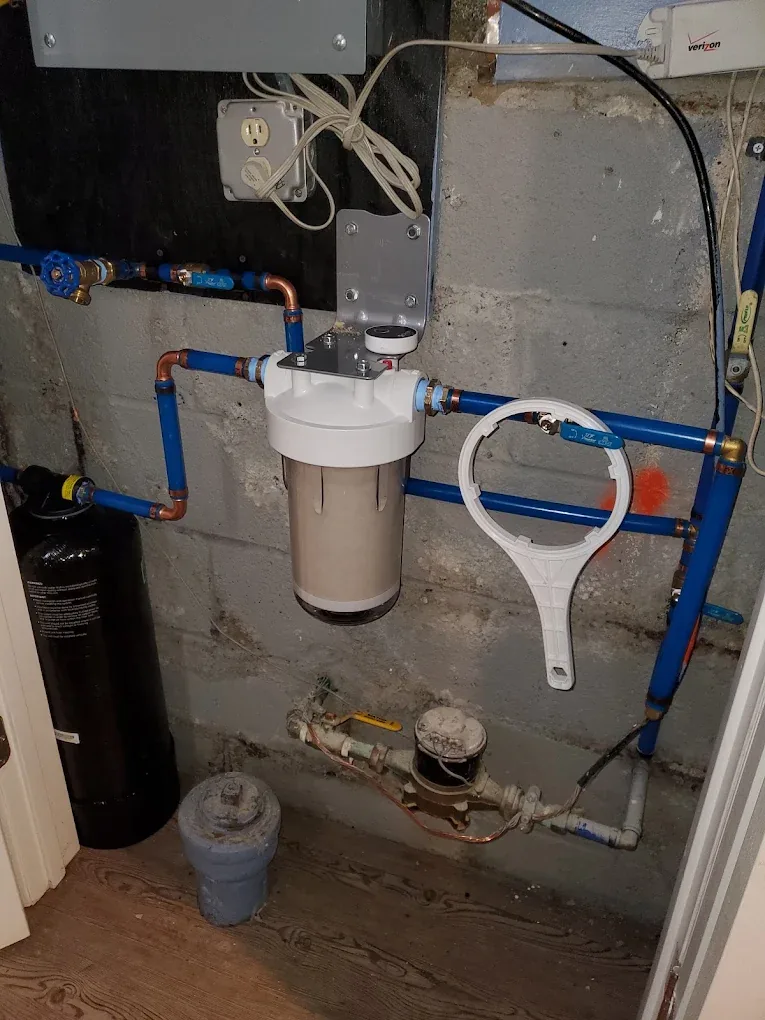
Maccabi Plumbing & Heating handles pressure reducing valve replacement across northern New Jersey, in homes where the water coming off the street runs harder than the plumbing was built to take. If your pipes bang when a faucet shuts, a toilet keeps running at night, or the little relief valve on your water heater drips, the cause is often a failed PRV (pressure regulator) combined with no expansion tank, not the fixture everyone keeps swapping. We are a licensed NJ Master Plumber (License #13345), bonded and insured. Before we quote anything, we put a gauge on an outside hose bib and read your actual static pressure, because the number tells us whether you need a new valve, an adjustment, or an expansion tank. That one test saves people from paying to replace the wrong part twice.
Call about high water pressure (908) 376-9159.
Direct Answer. What a Pressure Reducing Valve Does
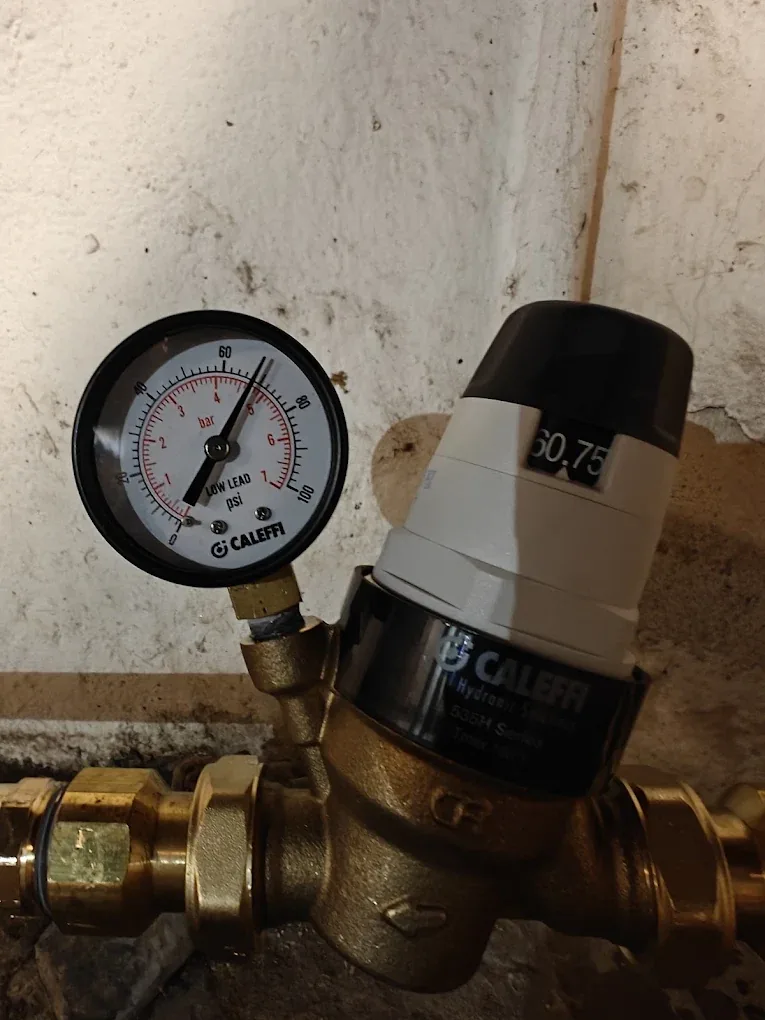
A pressure reducing valve is a spring-loaded valve installed on the main water line, usually right after the meter, that lowers high incoming street pressure to a safe household level. Municipal water often arrives at 80 to well over 100 PSI. The PRV knocks it down to a set point, typically 50 to 60 PSI, so your fixtures, appliances, and supply lines are not fighting pressure they were never rated for.
Signs Your Water Pressure Is Too High
High pressure rarely announces itself with a burst pipe on day one. It wears the house down quietly, and the tells show up at the weakest fixtures first. Here is what we get called about
- Banging or hammering pipes when a faucet or the washing machine valve shuts off (water hammer).
- A toilet that runs at night with no one touching it, refilling in short bursts.
- A dripping water-heater relief valve, the T&P valve on the tank, weeping or discharging into a pan or drain.
- Faucets and shower valves that wear out fast, drip soon after a new cartridge, or spit and sputter.
- Appliance hoses that fail early, especially washing-machine fill hoses and toilet supply lines.
- A pressure gauge reading over 80 PSI at an outside spigot, the definitive confirmation.
If two or three of these overlap, get the pressure checked before you replace another fill valve. The fill valve is usually a symptom.
What's Normal vs. Dangerous. NJ Water Pressure by the Numbers
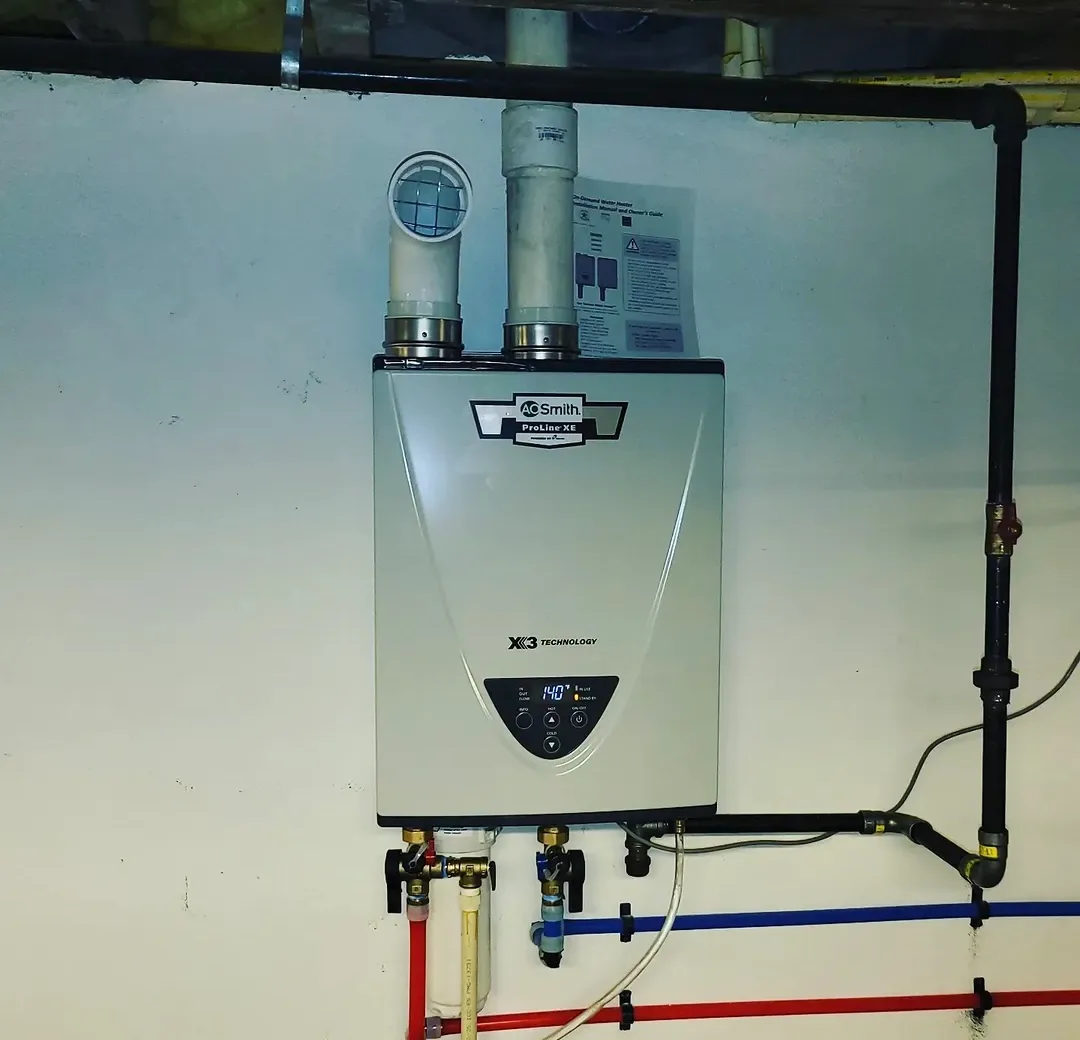
Household water pressure should sit around 40 to 60 PSI, and it must not exceed 80 PSI under code. Water utilities and valve manufacturers like Watts Water Technologies point to that 40-to-60 range as the comfortable, appliance-safe window, with 80 PSI as the hard ceiling. The Uniform Plumbing Code and International Plumbing Code both require a pressure-reducing valve wherever static water pressure exceeds 80 PSI (IPC/UPC). New Jersey adopts the plumbing subcode under the state Uniform Construction Code, so that 80-PSI limit is not a suggestion here, it is the rule your inspector goes by.
Anything reading in the 90s or triple digits is stressing every joint, valve, and appliance in the house every minute of the day.
Local housing stock
How High Pressure Damages Your Home
High water pressure shortens the life of everything it touches, and the failures cost far more than the valve that would have prevented them. Constant over-pressure grinds out faucet cartridges and toilet parts, blows out rubber washing-machine hoses (a top cause of catastrophic laundry-room floods), and puts standing strain on solder joints and compression fittings that were fine at 55 PSI.
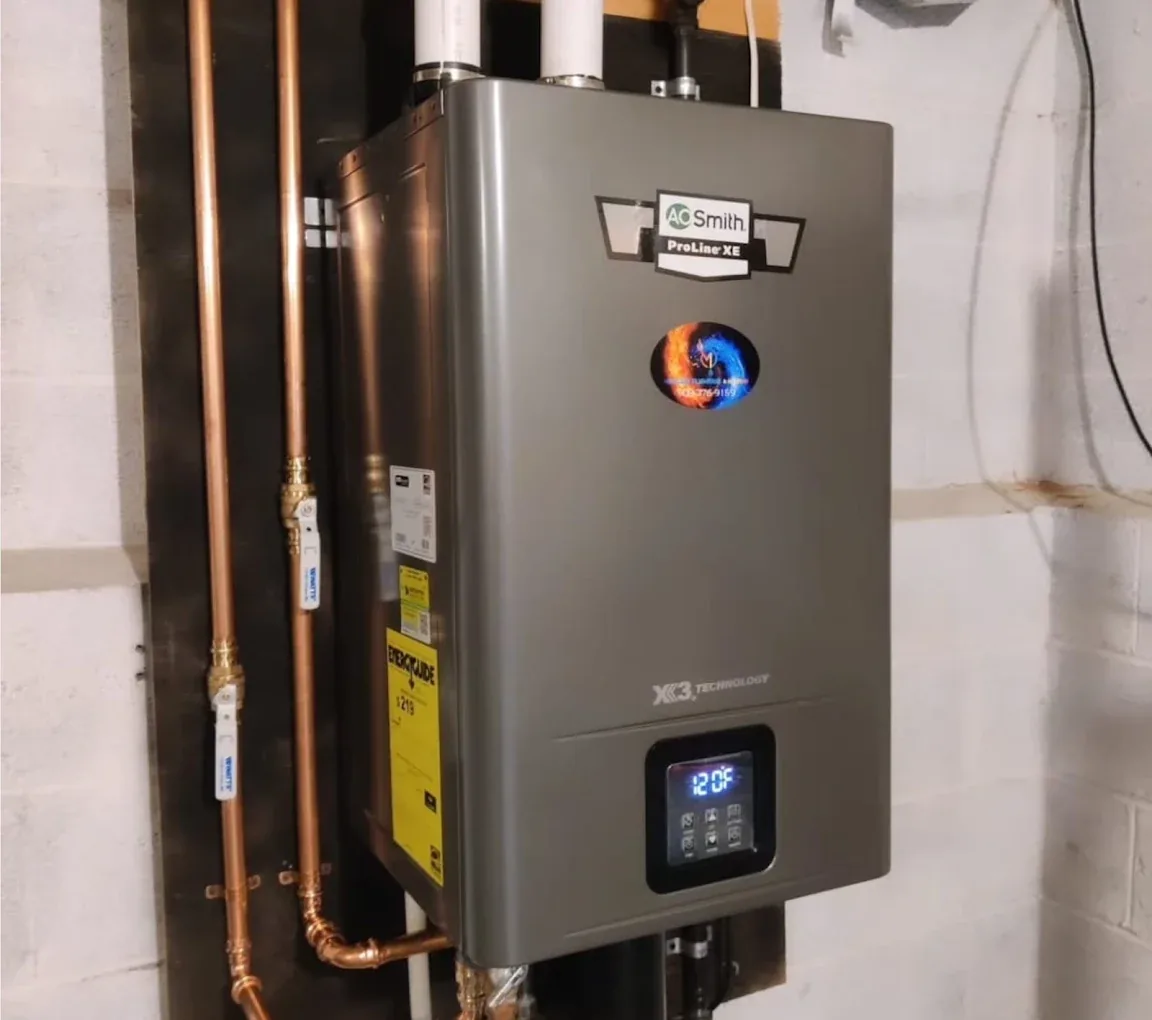
Then there is the part most people never connect. A PRV creates a closed plumbing system, water can come in but not push back out to the street. When your water heater fires and the water inside expands, that expansion has nowhere to go. Pressure climbs while no tap is open. This is thermal expansion, and it is the hidden reason a toilet "runs at night" and a water-heater relief valve drips. The system finds the weakest fixture and bleeds off there. The fix is an expansion tank, which gives the expanding water a cushion to push into. Replace the toilet or the heater without addressing pressure and expansion, and the same symptom comes back on the next weakest part. That is why we gauge static pressure first instead of guessing at fixtures. If your heater is showing these signs, our water heater repair and replacement work always starts with the pressure question.
Repair or Replace the PRV?
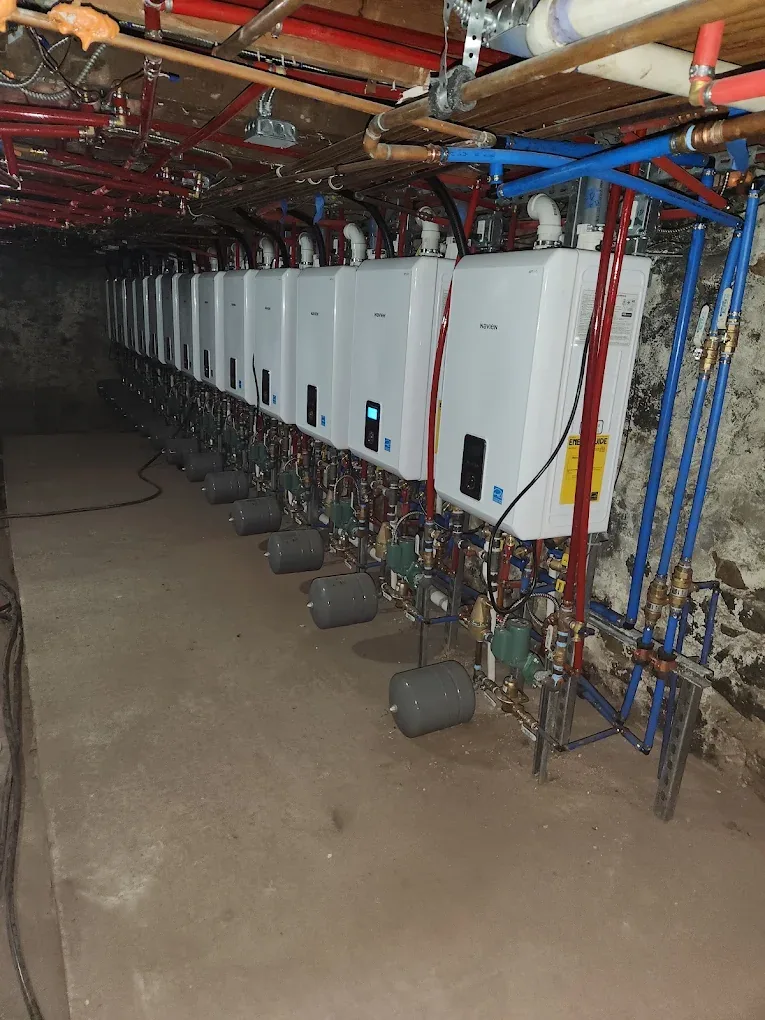
Not every high-pressure call ends in a new valve. Sometimes the existing PRV is fine and simply drifted out of adjustment, in which case we reset the spring to your target PSI and recheck. Some brass-body valves can be rebuilt with a repair kit if the body is sound. But a PRV that is 15 to 25 years old and seized, corroded, or reading wildly no matter how we turn the screw is done, and rebuilding it is throwing good money after bad. We tell you which situation you are in and why. In a lot of older northern-NJ homes the original meter-side PRV is decades old and has quietly failed shut or open, and the homeowner never knew there was a valve there to check. A valve that failed shut can even mask high street pressure until it lets go, and then the pressure hits the house all at once. When we set a new valve, we set it to a target you can feel, strong enough for a good shower on the top floor but well under the code ceiling.
Pricing, explained
Pricing & What to Expect
Straightforward PRV replacement in New Jersey typically runs about $350 to $750, with the range moving up if we add an expansion tank, the valve sits in a cramped or corroded spot, or the pipe needs rework to accept the new fitting. Simply adjusting or rebuilding a serviceable existing valve costs less than a full swap. These are market ranges, not a quote, and we would rather test your pressure and give you a real number than throw a figure at a problem we have not seen. Klarna financing is available if you want to spread the cost. For how we price plumbing work generally, see our plumbing pricing in NJ.
Why Maccabi
Why Choose Maccabi
We are a licensed NJ Master Plumber (#13345), bonded and insured, and we hold a 4.9-star rating across 294 Google reviews. What sets our high-pressure calls apart is simple. We gauge first. Parts of northern NJ, particularly homes sitting lower on the municipal grid or near a pumping station, get street pressure well over the 80-PSI ceiling, and the hillier, higher-elevation neighborhoods around West Orange and Montclair can swing enough to punish fixtures and appliances. We read the number, explain what it means for your house, and fix the actual cause rather than the fixture that happened to fail first.
Common problems we fix
Common Pressure Reducing Valve Problems We Fix
Most PRV trouble traces to a valve that has aged out, or a closed system with no cushion for the water to push into. Here is what we actually find behind the symptoms
A valve drifted out of adjustment. The spring loses its setting over the years and pressure creeps back above the safe range, even on a valve that otherwise still works.
A worn seat or diaphragm. The internal parts no longer hold the set point, so the pressure hunts up and down instead of staying put.
A seized, corroded body. On a 15-to-25-year-old PRV the brass body can crud up solid, and no amount of turning the adjustment screw changes the reading.
A valve failed open, passing full street pressure straight through to the house.
A valve failed shut, choking the flow so every faucet runs weak.
A missing or waterlogged expansion tank, which lets thermal expansion spike the pressure every time the water heater fires.
How it works
How a Maccabi Pressure Reducing Valve Replacement Visit Works in NJ
Here is how a straightforward replacement goes
- 01
Gauge the static pressure
at an outside hose bib to confirm the reading and rule out a fixture problem.
- 02
Inspect the existing valve, meter, and main shutoff
, and check whether an expansion tank is present or needed.
- 03
Shut off the water
at the main or curb stop and drain down the line.
- 04
Cut out the old PRV
and clean up the pipe ends.
- 05
Install and set the new valve
to your target pressure, commonly 50 to 55 PSI.
- 06
Add an expansion tank
on the supply near the water heater if the closed system requires one.
- 07
Restore water, bleed air, and re-gauge
to confirm the pressure holds steady, drawing and not drawing.
Most single-valve replacements are a same-visit job, often two to three hours. Adding an expansion tank or dealing with a tight, corroded meter setup adds time.
Why it pays to do it right
Benefits of Professional Pressure Reducing Valve Replacement
A licensed replacement fixes the cause and protects everything downstream of the valve.
We gauge your static pressure first, so you pay to fix the actual problem, not the fixture that failed because of it.
The new valve is set below the 80-PSI code ceiling and still strong enough for a real shower on the top floor.
One contractor for the whole system. We handle the PRV and the expansion tank together, and the water-heater side too, since we do plumbing and heating both.
Work is done by an NJ Master Plumber (#13345), bonded and insured, with permits pulled and inspected where the town requires them.
Upfront pricing and a written range before we start, plus the 1-year Maccabi Guarantee on the work.
Honest pricing
What Drives Your NJ Price (and Your Written Quote)
We don't hide numbers behind a phone call. Every quote is written and specific, so you know what changes it before we start.
- The fixture or system involved and its condition
- Parts, equipment size, and efficiency tier
- Access, permits, and whether it's an emergency call
Flexible payment / financing available via Klarna.
Get Your Quote Today
Tell us what's going on and we'll give you a clear, written price, no obligation. Virtual estimates available, and we'll call you back as soon as we can.
Call or Text (908) 376-9159The Maccabi Guarantee
We stand by our work with a 1-year labor warranty, plus the manufacturer's warranty on all parts.
Verified credentials
What You Get With a Licensed NJ Master Plumber
- Licensed NJ Master Plumber (#13345), fully bonded and insured
- 4.9★ from 294 Google reviews
- 24-hour response, Sun–Fri, closed Saturday
- Honest repair-or-replace advice, with the price before we start
- Backflow, Navien, and OSHA certified
Verified Google reviews
What northern-NJ customers actually said
Maccabi Plumbing & Heating is rated 4.9 stars across 294 Google reviews. These are unedited, published reviews from that profile.
Came quickly to fix a leak -- price was reasonable and when I got an estimate for two potential solutions, they were very evenhanded and didn't try to upsell me to the more expensive one. Ended up having a small issue with water pressure after the repair, and they again came out promptly and fixed the issue, and I appreciated that there wasn't a second service call fee. They were very respectful of our time (and our request to try and keep the noise down while our toddler napped).
Maccabi gave me quick, professional service when I needed our water heater replaced. The office gave me different options to consider, and a time window for when the workers would arrive. The workers were respectful, updated us on how the work was going, and cleaned up everything. We were very happy with all aspects of service.
Maccabi replied to my inquiry right away, and was able to come replace my broken water heater within 24 hours. Everyone was professional and very friendly. Price was reasonable. I'm happy with the work!
Visit / contact
Reach Maccabi Plumbing & Heating in West Orange, NJ
Maccabi Plumbing & Heating
300 Executive Drive
West Orange, NJ 07052
Open 24 hours Sunday–Friday. Closed Saturday.
Emergency line answered nights & early mornings, Sun–Fri.
Street parking is available near our office. Our licensed plumber travels to your property. Most residential and commercial work is completed on site across northern New Jersey.
FAQ
NJ Pressure Reducing Valve Replacement Questions, Answered
24-hour, Sun–Fri availability
Not seeing your question? Call or text and a licensed plumber will talk it through, no answering service run-around.
Call or Text (908) 376-9159Household water pressure above 80 PSI is too high and violates plumbing code, which requires a pressure reducing valve past that point. The ideal range is about 40 to 60 PSI. High pressure quietly damages fixtures, appliances, and supply lines, so a simple gauge test at an outside hose bib is worth doing if you hear banging pipes.
Ready to Stop the Banging Pipes?
If your pressure is running high, every day it stays that way is another day of wear on your fixtures, appliances, and pipes. Let a licensed NJ Master Plumber gauge it, explain the number, and set it right.
Get a free PRV replacement quote. Or call, text, or WhatsApp (908) 376-9159. We answer 24 hours a day, Sunday through Friday.