West Orange, NJ · Licensed #13345
Backflow Prevention & Certification in NJ
NJDEP backflow testing, certification & RPZ/DCVA installation by a licensed NJ plumber. Stay compliant.
- NJ Master Plumber #13345
- Bonded & Insured
- 4.9★ · 294 Google reviews
- 24-Hour Service Sun–Fri
- NJ Master PlumberLicense #13345 · 36BI01334500
- Bonded & Insured
- Backflow Certified
- Navien Certified
- OSHA Certified
Licensed & local
Licensed Backflow Prevention & Certification in NJ
New Jersey requires most commercial, irrigation, fire-line, and boiler-fed water systems to have a backflow prevention assembly tested and certified every year, and Maccabi Plumbing & Heating tests, repairs, and re-certifies them across northern New Jersey. We are a licensed NJ Master Plumber (#13345) and Backflow Certified, which means when a device fails the annual test, we can often rebuild it on the same visit and re-test instead of billing you for a second trip. Then we file the paperwork with your water purveyor so the deadline is closed and the fine or shut-off never lands. This page is part of our gas and backflow safety services.
Is Backflow Testing Required in NJ?
Yes. New Jersey requires testable backflow prevention assemblies to be tested at least once a year by a certified tester, under NJDEP cross-connection control rules enforced by your local water purveyor. Commercial buildings, irrigation systems, fire lines, and boiler-fed systems are the most common devices that must comply, and the passing certificate has to be filed with the utility.
If you got a notice from NJ American Water or Passaic Valley Water Commission with a due date on it, that is the annual test coming due. The clock is real, and so are the consequences of ignoring it.
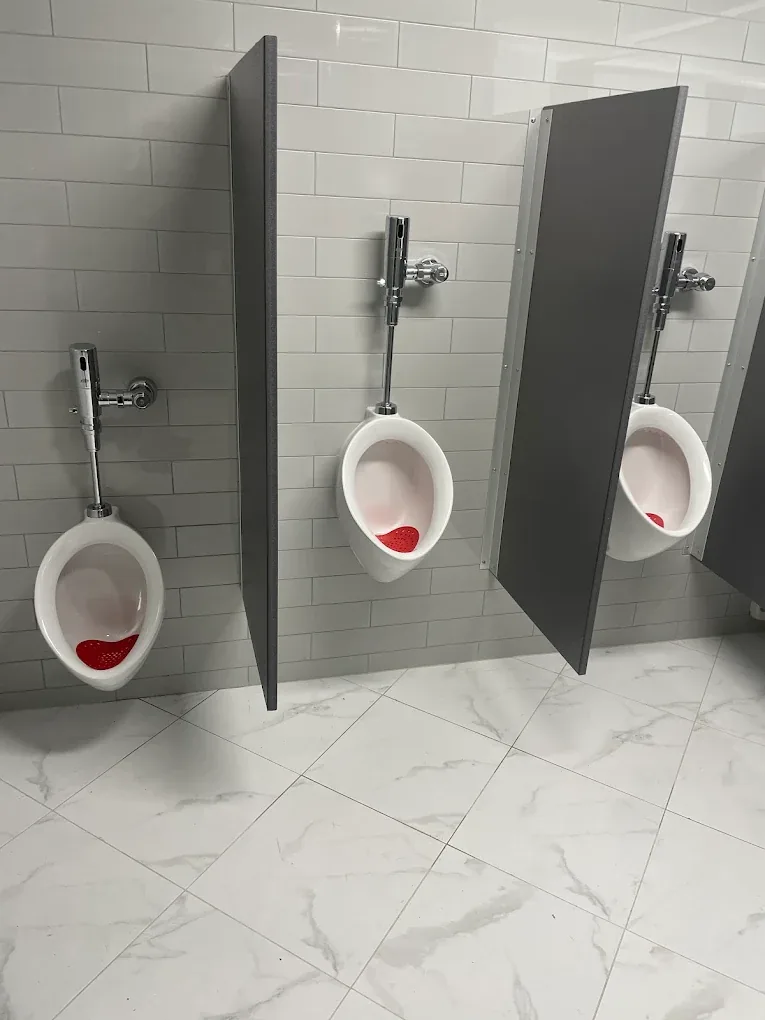
Commercial & compliance
What Is Backflow (and Why It's Dangerous)
Backflow is when water reverses direction in your plumbing and pulls contaminants back into the clean drinking-water supply through a cross-connection. The EPA's Cross-Connection Control Manual describes two ways it happens. Back-siphonage, when a pressure drop in the main (a water-main break or heavy fire-hydrant draw) sucks water backward, and backpressure, when a downstream system like a boiler or booster pump pushes at higher pressure than the supply.
The risk is not theoretical. A cross-connection can pull fertilizer from an irrigation line, chemicals from a boiler loop, or stagnant water from a fire system straight into the potable supply that a whole building drinks from. That is why NJDEP and the EPA require a physical barrier, a backflow preventer, on higher-hazard connections, and why the state makes you prove every year that the barrier still works.
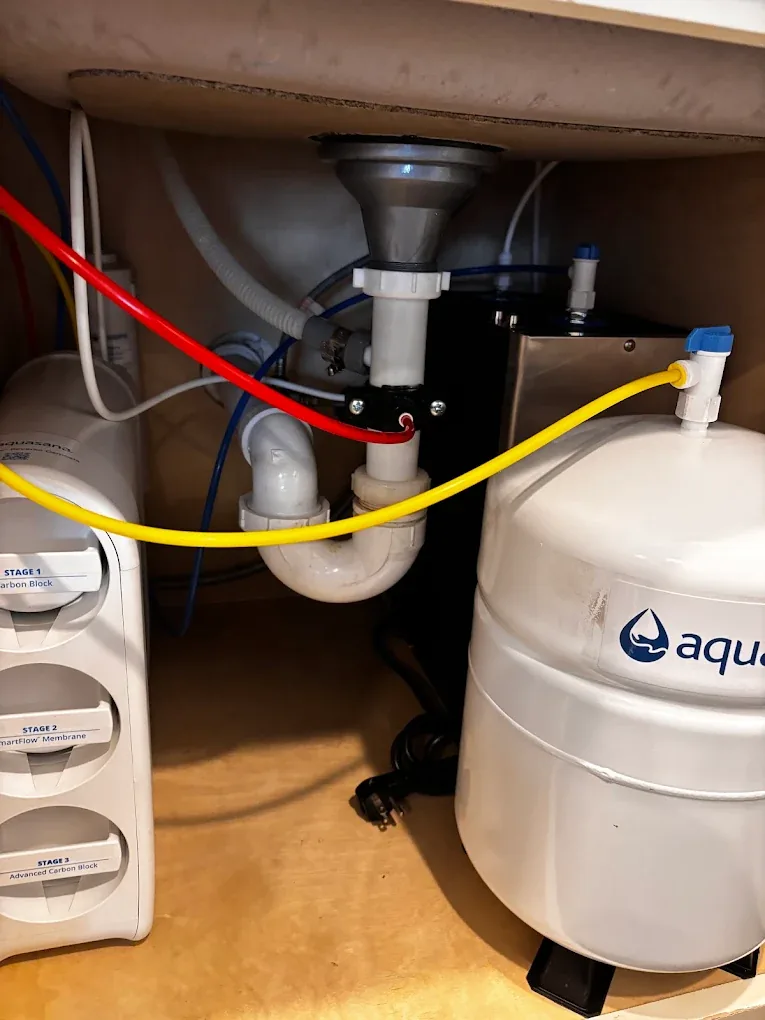
Commercial & compliance
Types of Backflow Preventers We Test & Install
Different hazard levels call for different assemblies, and matching the device to the connection is part of doing this right. Here is how the three most common types compare
| Device | Where it's used | Hazard level |
|---|---|---|
| RPZ (Reduced Pressure Zone assembly) | Highest-hazard connections. Boilers, chemical feeds, irrigation with injectors, most commercial services | High. Protects against both back-siphonage and backpressure. |
| DCVA (Double Check Valve Assembly) | Moderate-hazard. Fire lines, low-risk commercial and multi-family services | Non-health-hazard. Two independent check valves in series. |
| PVB (Pressure Vacuum Breaker) | Irrigation and similar systems where backpressure is not a factor | Back-siphonage only. Must sit above the highest downstream outlet. |
Maccabi tests and installs all three. The assemblies we see most in northern NJ are Watts and Febco units, and we stock rebuild kits for the common models so a repair does not stall waiting on parts. If a device is beyond a rebuild, we size and install the correct replacement for the hazard on that connection, not just whatever is cheapest.
Commercial & compliance
What Happens During a Backflow Test
A backflow test is a short, hands-on check that confirms the internal checks and relief valve still hold under pressure, and it ends with a pass or fail. Here is the actual sequence
- Isolate the assembly. We close the downstream shutoff so the device is tested in a controlled state.
- Attach the test kit. A calibrated differential gauge connects to the assembly's test cocks.
- Read the differential. We measure the pressure drop across each check and confirm the relief valve opens at the right point.
- Record the results. Readings, device serial, and location go on the certificate.
- Tag and report the outcome. The device gets tagged, and a passing result becomes the filed Certificate of Compliance. A failing result moves straight to repair.
The whole test usually takes about twenty to thirty minutes on an accessible device.
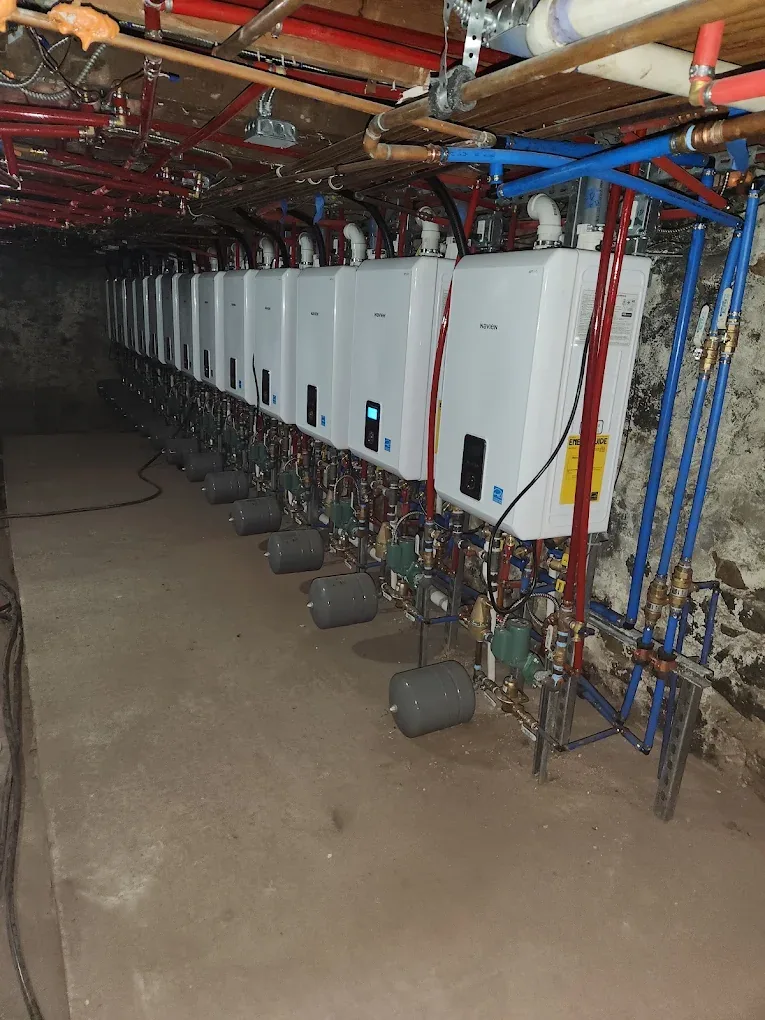
Failed a Test? Repairs & Re-Certification
If a device fails, it has to be repaired or replaced and then re-tested before it can be certified, and Maccabi can often do all of that in one visit. A failed RPZ almost always comes down to a fouled first or second check or a worn relief-valve seat. On the older Watts and Febco assemblies common in northern-NJ buildings, we carry the rebuild kits, so a failed test becomes a same-visit repair and re-test rather than a second trip and a second fee.
Once the rebuilt device passes, the new certificate is filed with your purveyor and the deadline is closed. If the assembly is too far gone to rebuild, we replace it with the correct device for the connection and certify the new one.
NJ Compliance. Frequency, Paperwork & Who Files It
The annual mandate is the part that trips most property owners up, so here is the whole cycle in plain terms. Testable backflow assemblies in New Jersey must be tested every year, and again after any repair or replacement, per NJDEP cross-connection control rules and the NJ Uniform Construction Code plumbing subcode. Your water purveyor issues a notice with the due date and requires the filed certificate back.
The document that satisfies the requirement is the Certificate of Compliance, signed by the certified tester, showing the device passed. That certificate goes to the purveyor, not just into your files. Miss the deadline and the purveyor can assess fines or, in a continued lapse, shut water off to the connection, which is why this cannot sit on a to-do list. Maccabi tracks the due date, performs the test, and files the paperwork so you are not chasing forms. If you manage multiple buildings, our commercial plumbing for property managers service rolls this into one schedule across the portfolio. For a plain-language walkthrough of the rules, see NJ backflow testing explained.
Pricing, explained
Cost & What to Expect
Backflow work in NJ splits into three cost tiers, and where you land depends on the device and its condition. An annual test on an accessible device is the smallest job. A repair adds parts and labor for the rebuild kit and the re-test. A full replacement is the largest, driven by the device type (an RPZ costs more than a DCVA), the pipe size, and how easy the assembly is to reach.
We quote before we start, and if a test fails we tell you the repair-versus-replace numbers before doing either. There is no upsell to a new assembly when a rebuild kit will pass the device and hold.
Licensed & local
Licensed, Insured & Certified
Only a certified backflow tester can legally test and certify a device in New Jersey, and Maccabi holds that credential alongside NJ Master Plumber License #13345. We are bonded and insured, Backflow Certified, and rated 4.9 stars across 294 Google reviews. A handyman or general contractor cannot certify a device, and a certificate from an uncertified tester will not satisfy your purveyor.
Commercial & compliance
Signs Your Backflow Preventer Is Failing
Most backflow devices fail quietly, and the annual test is what catches it. Between tests, these are the signs that something is already wrong
- The relief valve drips or dumps continuously. On an RPZ, a steady discharge from the relief port is the classic failure. It means a check has fouled and the device is doing exactly what it was designed to do. Dump rather than let contaminated water back into the supply.
- A sudden pressure drop after a water-main break nearby. That is the back-siphonage condition the device exists to stop, and it is worth a test afterwards even if the device looks fine.
- Visible leaking, corrosion, or a cracked body. Northern-NJ assemblies mounted outdoors or in unheated vaults split when they freeze.
- The device was never tagged, or the tag is years old. No current tag means no current certificate, and your purveyor is tracking that date whether you are or not.
- Water hammer or banging after the assembly. Sometimes a failing check, sometimes a pressure issue upstream, but worth diagnosing before it becomes a failed test.
A point worth making plainly. Cloudy or brown water at a tap is far more often a sewer or main-flushing issue than backflow. Some sites list discoloured water as a backflow symptom, which confuses two different problems. A real cross-connection event is usually invisible, which is exactly why annual testing is mandatory rather than optional.
Buildings and Industries We Test in Northern NJ
Any connection where the water supply could be contaminated by what is downstream of it needs a tested assembly. In practice that means a predictable list of building types, and each one has a typical device
| Property type | Typical connection | Usual device |
|---|---|---|
| Restaurants and food service | Dishwashers, carbonators, grease-side equipment | RPZ |
| Medical, dental and veterinary offices | Chair units, autoclaves, lab sinks | RPZ |
| Salons and barbershops | Shampoo bowls, chemical mixing sinks | RPZ or PVB |
| Schools and municipal buildings | Boiler loops, science labs, irrigation | RPZ plus DCVA on the fire line |
| Warehouses and light industrial | Fire suppression, wash-down, process water | DCVA on fire, RPZ on process |
| Multi-family and apartment buildings | Boiler feed, booster pumps | RPZ |
| Any property with lawn irrigation | Irrigation zone, especially with fertiliser injection | PVB or RPZ |
Northern NJ has a lot of the middle rows. The Route 10 and Eisenhower Parkway corridors are full of office and light-industrial buildings whose fire lines and boiler loops were fitted decades ago, and the assemblies on them have usually been rebuilt at least once.
Commercial & compliance
New Backflow Preventer Installation
Not every job starts with an existing device. We install new assemblies when a purveyor mandates one on an existing connection, when a building adds irrigation or a boiler, and on new construction and tenant fit-outs.
Sizing is the part that gets done wrong. The device has to match the hazard level of the connection, not just the pipe diameter. A high-hazard connection with a chemical feed or a boiler loop needs a reduced pressure zone assembly. Putting a double check valve there because it is cheaper leaves a health hazard on a potable line and will not pass. Placement matters too. An RPZ discharges water when it relieves, so it needs a drain or an air gap that can take the flow, and a PVB has to sit above the highest downstream outlet or it does nothing at all.
Every new assembly is tested and certified as soon as it goes in, and that first certificate is filed with your purveyor. From there it joins the annual cycle. If you want that tracked rather than remembered, our maintenance contracts roll backflow re-testing into a scheduled programme across one building or a whole portfolio.
Know the warning signs
Signs You Need Backflow Testing
Backflow testing is deadline-driven, but a few situations tell you the test is due or overdue.
A dated notice from NJ American Water or Passaic Valley Water Commission with a test due date.
It has been more than a year since your last passing certificate was filed.
You just added an irrigation system, boiler, or fire line, which triggers a first test before it can stay in service.
The relief valve on an RPZ is dripping or discharging, a sign the device is fouled and likely to fail.
You are buying or leasing a commercial or multi-family building and need proof of compliance.
Discolored water or a pressure complaint after a nearby main break, when back-siphonage is possible.
Why it pays to do it right
Benefits of Professional Backflow Testing
A certified tester does more than run a gauge. The credential and the paperwork are what keep you compliant.
Only a certified tester's certificate counts. Your purveyor accepts nothing else, and Maccabi holds that credential alongside NJ Master Plumber License #13345.
A failed device can often be rebuilt and re-tested on the same visit, so you avoid a second trip and fee.
We file the Certificate of Compliance with the purveyor, closing the deadline instead of leaving you to chase forms.
Hitting the annual date keeps fines and water shut-offs off the table.
Bonded and insured. Certified work on a public-health device is covered.
The right assembly gets matched to the hazard on the connection, not swapped for whatever is cheapest.
Local Relevance. Commercial & Multi-Family in Northern NJ
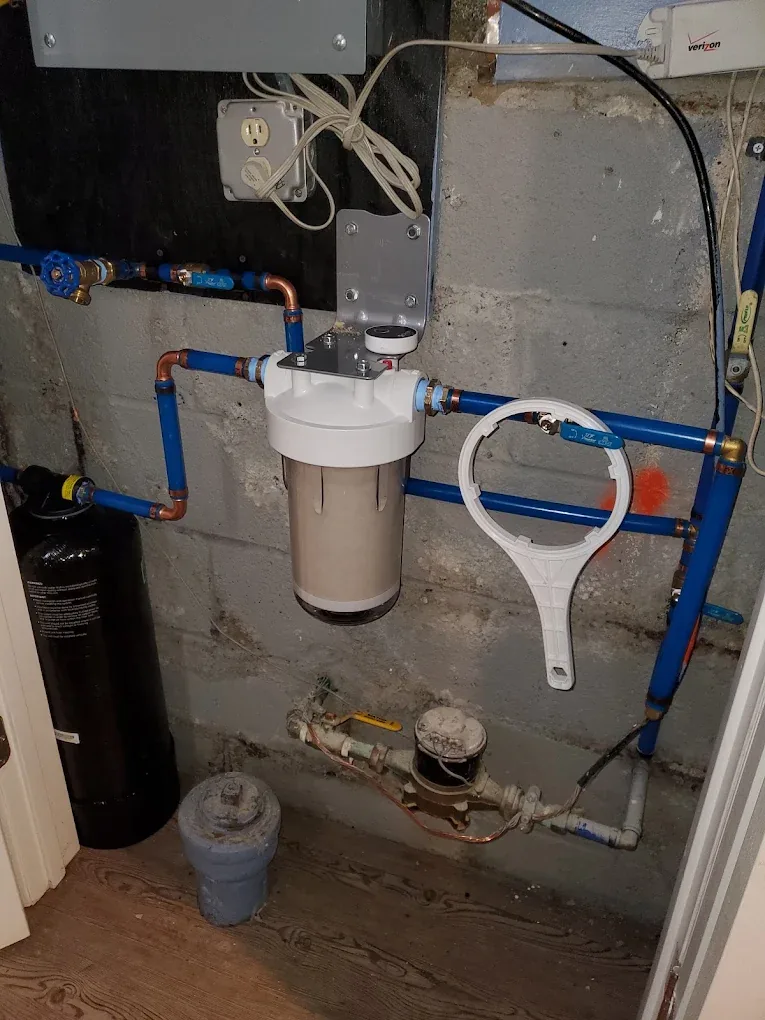
Older northern-NJ commercial and multi-family buildings often have aging RPZ and DCVA assemblies that are due for replacement, not just another test. In Passaic, Clifton, and West Orange, a lot of these devices were installed decades ago and have been rebuilt more than once. When the body cracks or the seats no longer hold after a rebuild, it is time to replace, and a good tester will tell you that instead of certifying a device on borrowed time.
Local water purveyors, including NJ American Water and Passaic Valley Water Commission, are the ones sending the annual notices and requiring the filed certificate. Maccabi works with those submissions regularly, so the compliance side is routine, not a scramble. For Passaic County property owners specifically, see backflow testing in Passaic County.
Honest pricing
What Drives Your NJ Price (and Your Written Quote)
We don't hide numbers behind a phone call. Every quote is written and specific, so you know what changes it before we start.
- The fixture or system involved and its condition
- Parts, equipment size, and efficiency tier
- Access, permits, and whether it's an emergency call
Flexible payment / financing available via Klarna.
Get Your Quote Today
Tell us what's going on and we'll give you a clear, written price, no obligation. Virtual estimates available, and we'll call you back as soon as we can.
Call or Text (908) 376-9159The Maccabi Guarantee
We stand by our work with a 1-year labor warranty, plus the manufacturer's warranty on all parts.
Verified credentials
What You Get With a Licensed NJ Master Plumber
- Licensed NJ Master Plumber (#13345), fully bonded and insured
- 4.9★ from 294 Google reviews
- 24-hour response, Sun–Fri, closed Saturday
- Honest repair-or-replace advice, with the price before we start
- Backflow, Navien, and OSHA certified
Verified Google reviews
What northern-NJ customers actually said
Maccabi Plumbing & Heating is rated 4.9 stars across 294 Google reviews. These are unedited, published reviews from that profile.
Maccabi gave me quick, professional service when I needed our water heater replaced. The office gave me different options to consider, and a time window for when the workers would arrive. The workers were respectful, updated us on how the work was going, and cleaned up everything. We were very happy with all aspects of service.
Maccabi replied to my inquiry right away, and was able to come replace my broken water heater within 24 hours. Everyone was professional and very friendly. Price was reasonable. I'm happy with the work!
Needed to remedy a leak pouring from my dining room ceiling suddenly. I called Maccabi and they immediately sent someone who diagnosed and resolved the issue. I would definitely recommend them. They are a pleasure to deal with.
Visit / contact
Reach Maccabi Plumbing & Heating in West Orange, NJ
Maccabi Plumbing & Heating
300 Executive Drive
West Orange, NJ 07052
Open 24 hours Sunday–Friday. Closed Saturday.
Emergency line answered nights & early mornings, Sun–Fri.
Street parking is available near our office. Our licensed plumber travels to your property. Most residential and commercial work is completed on site across northern New Jersey.
FAQ
NJ Backflow Prevention & Certification Questions, Answered
24-hour, Sun–Fri availability
Not seeing your question? Call or text and a licensed plumber will talk it through, no answering service run-around.
Call or Text (908) 376-9159Yes. New Jersey requires testable backflow prevention assemblies to be tested at least once a year by a certified tester, under NJDEP cross-connection control rules enforced by your local water purveyor. Commercial, irrigation, fire-line, and boiler-fed systems are the most common. Maccabi Plumbing & Heating tests, repairs, and re-certifies them across northern NJ.
Schedule Testing & Certification
Whether you have a deadline on a notice, a device that just failed, or a new assembly that needs its first certificate, Maccabi tests, repairs, re-certifies, and files the paperwork. Call or text (908) 376-9159, or book online and we will get you certified before the purveyor's clock runs out.
Schedule Testing & Certification
Maccabi Plumbing & Heating · 300 Executive Drive, West Orange, NJ 07052 · (908) 376-9159 (call, text, or WhatsApp) · Office@MaccabiPlumbing.com