NJ plumbing & heating guide
What Is Backflow Testing? NJ Rules Explained
Backflow testing explained for NJ. Who must test, the annual NJDEP mandate, RPZ/DCVA, and the Certificate of Compliance.
Licensed NJ Master Plumber #13345 · 4.9★ (294 Google reviews)
By Morey Katzourin · NJ Master Plumber License #13345· Bonded & insured
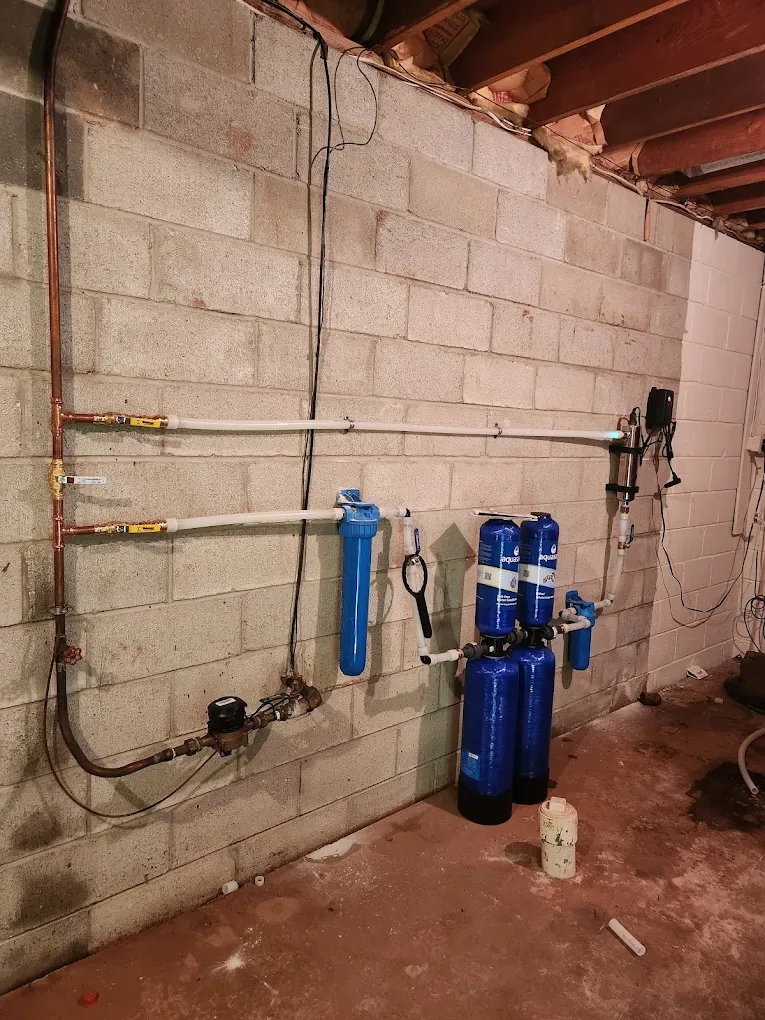
Most people meet backflow testing the same way. A notice shows up from the water utility or the town saying the building's annual test is overdue, and nobody in the office knows what that means. If you manage a mixed-use property in Passaic or an institutional building in Clifton, you have probably seen one of these letters. Backflow testing is an annual safety check, required across New Jersey, that confirms the one-way valve protecting the drinking water still works. A certified tester performs it, and the results get filed with your local water purveyor on a Certificate of Compliance. Below is the whole thing in plain English. What it is, who has to do it, how the test runs, and what that certificate is for.
Book NJ Backflow Testing (908) 376-9159.
What Is Backflow Testing?
Backflow testing is the yearly inspection of a backflow prevention device to confirm it still stops water from flowing backward into the public drinking-water supply. A backflow preventer is a mechanical assembly, usually brass, installed on a water line to allow flow in one direction only. Inside it are spring-loaded check valves and, on higher-hazard units, a relief valve. Over a year of pressure swings, mineral buildup, and normal wear, those internal parts can weaken. The test uses a calibrated differential-pressure gauge to measure whether the checks still hold tight and whether the relief valve opens at the right point.
Think of the device as a turnstile for water. It should let clean water into the building and never let anything come back out toward the street main. The annual test is how you prove the turnstile still only turns one way. Nobody can eyeball that from outside the assembly, which is the entire reason a gauge test exists.
What Is Backflow and Why Is It Dangerous?
Backflow is the reverse flow of non-potable water into the clean supply, and it happens through a cross-connection, any point where the drinking-water line meets something that could contaminate it. There are two ways it happens. Back-siphonage occurs when pressure in the main drops, often during a nearby hydrant use, a water-main break, or heavy draw, and the sudden vacuum pulls water backward. Back-pressure occurs when a downstream system, a boiler loop or a pressurized irrigation line, pushes at a higher pressure than the supply and forces its water upstream.
The hazard is real, not theoretical. The U.S. Environmental Protection Agency documents cross-connections as a recognized pathway for drinking-water contamination in its Cross-Connection Control Manual, which is why every state runs a control program. A garden hose left in a bucket of fertilizer, a boiler dosed with treatment chemicals, an irrigation head sitting in a puddle of lawn runoff. Each is a cross-connection, and each is exactly what the preventer and its annual test guard against.
Is Backflow Testing Required in NJ? (And How Often)
Yes. New Jersey requires testable backflow prevention devices to be tested every year by a certified backflow prevention device tester, with the results filed with the local water purveyor. The requirement flows from the state's Safe Drinking Water Act cross-connection control rules, administered by the New Jersey Department of Environmental Protection (NJDEP) under N.J.A.C. 7:10, with device installation also touching the Uniform Construction Code (N.J.A.C. 5:23) administered by the New Jersey Department of Community Affairs. The annual cadence is not a suggestion from your plumber. It is the rule, and the water purveyor tracks who has and has not filed.
That annual timing catches most property managers off guard. A device that passed last spring is not "done." Springs relax and rubber seats harden on their own schedule, so the state assumes any device can drift out of tolerance within twelve months. Miss the window and you are the one holding the exposure, not the tester.
Who Must Have a Backflow Device Tested?
If your property has a testable backflow assembly, you are almost certainly on the hook. The devices that fall under the annual rule show up in predictable places
- Commercial and mixed-use buildings with a dedicated fire-suppression line
- Multifamily and institutional properties, including the older apartment stock and community buildings across Passaic and Clifton
- Lawn and irrigation systems, where the sprinkler line ties into the potable supply
- Boilers and hydronic heating loops that use chemical treatment
- Restaurants, medical offices, and any building with process equipment tied to the water line
- Any property a purveyor has flagged with a hazard rating and a device on record
Here is the local pattern we see constantly. An older Passaic multifamily or a Clifton institutional building has an RPZ or a double-check assembly installed years ago, the property changes hands or managers, and the annual test quietly lapses. The device is still there. The paperwork is not. That gap is what triggers the overdue notice.
Types of Backflow Preventers. RPZ, DCVA & PVB
New Jersey properties run mostly three device types, and which one you have depends on the hazard level of what is downstream. The higher the risk to the drinking water, the more protective (and more failure-prone) the device.
| Device | Common use | Hazard level | Notes |
|---|---|---|---|
| RPZ (reduced-pressure-zone assembly) | Boilers with chemicals, commercial process lines, high-hazard connections | High | Two checks plus a relief valve. The most protective and the most sensitive to wear |
| DCVA (double-check valve assembly) | Fire lines, lower-hazard commercial connections | Low to medium | Two independent check valves. No relief valve |
| PVB (spill-resistant pressure vacuum breaker) | Lawn irrigation systems | Moderate (back-siphonage only) | Must sit above the highest downstream outlet. Does not protect against back-pressure |
The practical takeaway. An RPZ protects against the nastiest cross-connections but has the most moving parts, so it is the device most likely to fail a test. A PVB on a sprinkler line is simpler but only guards against back-siphonage, which is why you will never see one protecting a chemically treated boiler.
What Happens During a Backflow Test
The on-site test is quick, usually well under an hour for a single device, and it follows the same sequence every time
- The tester locates the assembly and identifies the device type and size, then notes the serial number for the paperwork.
- Downstream water is shut off briefly, so tenants and occupants may lose water for a few minutes.
- A calibrated differential-pressure gauge is connected to the device's test cocks (the small ports built into the assembly).
- The tester cycles the shutoffs and reads how each check valve holds and, on an RPZ, at what pressure the relief valve opens.
- Readings are compared against the pass thresholds for that device.
- Results are recorded, and the device gets a pass or fail with the specific readings written down.
That brief water shutoff is worth a heads-up to tenants ahead of time, especially in a multifamily building. It is the one part of the test occupants actually notice.
If Your Device Fails. Repair, Rebuild or Replace
A failed test rarely means you need a whole new device. This is the single most useful thing to know, and it is where a lot of building owners lose money. Most RPZ and DCVA failures trace to a worn rubber check seat or a tired relief-valve component, and a certified tester can rebuild the assembly with the manufacturer's repair kit, then retest it on the spot or on a return visit. A rebuild plus retest usually costs a fraction of a full replacement.
Replacement is genuinely warranted in a narrower set of cases. A cracked or corroded body, an obsolete assembly with no available parts, a device that is undersized or the wrong type for its hazard, or one that fails again right after a proper rebuild. If a company quotes you a brand-new assembly the moment your device fails, without mentioning a rebuild, get a second opinion. We would rather rebuild and retest a serviceable device than sell you a replacement you did not need.
Get your backflow certified and filed NJ backflow testing and certification.
The Certificate of Compliance & Filing With the Town
The Certificate of Compliance is the document that proves your device passed, and filing it is what actually satisfies the requirement. The flow is straightforward. The certified tester performs the test, completes the certificate with the device details and the gauge readings, and the results are submitted to your local water purveyor (and, where the town requires it, the municipal office). The building owner or manager keeps a copy on file.
The deadline is the annual anniversary the purveyor has on record for your device. Let it lapse and the consequences escalate. Reminder notices first, then potential fines, and in the more serious cases a purveyor can move to restrict or shut off water service until the building is back in compliance. For a commercial or institutional property, that is not a risk worth carrying over a test that takes under an hour. If you manage several buildings, this is the paperwork worth putting on a recurring calendar. Maccabi handles the test, the rebuild if one is needed, and the certificate filing as one job, which keeps commercial and institutional plumbing compliance off your desk.
We also cover the related gas and backflow safety services that older northern-NJ buildings tend to need at the same time, and we work throughout the area, including plumbing service in Passaic.
FAQ
Frequently asked questions
24-hour, Sun–Fri availability
Not seeing your question? Call or text and a licensed plumber will talk it through, no answering service run-around.
Call or Text (908) 376-9159Yes. New Jersey requires testable backflow prevention devices to be tested every year by an NJDEP-certified backflow prevention device tester, with results filed with the local water purveyor. The rule protects the public drinking-water supply from cross-connection contamination. It applies to most commercial, multifamily, institutional, irrigation, and fire-line devices.
Keep reading
More NJ plumbing & heating guides
Frozen Pipe? What to Do Right Now
Frozen pipe? Step-by-step on what to do right now to prevent a burst, and when to call a 24hr Sun-Fri NJ plumber. Call (908) 376-9159.
Read the guide
Should You Repair or Replace Your Water Heater?
When to repair vs replace a water heater in NJ, age, cost and safety rules of thumb from a licensed plumber. Call (908) 376-9159.
Why Sump Pumps Fail During Storms
Why sump pumps fail during NJ storms, power loss, stuck floats, overload, and how backups prevent flooding. Read the full guide.