
NJ plumbing & heating guide
How to Tell If Your Sewer Line Is Broken
7 warning signs your sewer line is broken, backups, gurgling, sinkholes and smells, and what to do next in NJ.
Licensed NJ Master Plumber #13345 · 4.9★ (294 Google reviews)
By Morey Katzourin · NJ Master Plumber License #13345· Bonded & insured
The clearest way to tell if your sewer line is broken is a combination of signs. Repeated whole-house backups, gurgling drains, sewer-gas smells indoors or in the yard, an unusually lush or sunken patch of lawn over the line, and several slow drains at once. A single slow sink is usually a clog. Multiple fixtures acting up together points at the line itself. A sewer camera inspection is what confirms whether it is a clog or a real structural break.
If you own a pre-1950 home in West Orange, Montclair, Passaic, or Bloomfield, this matters more than most homeowners realize, because the cast-iron and Orangeburg laterals under those houses are exactly the age where they crack, scale shut, and collapse. Here are the signs, how to tell a broken line from a simple clog, and the smart next step before anyone starts digging up your yard.
Signs Your Sewer Line Is Broken
Watch for these seven signs. One on its own might be nothing. Two or three together, especially the recurring ones, mean it is time for a camera.
- Repeated backups across multiple fixtures. Water coming up in a tub when you flush a toilet, or a basement floor drain backing up, means the blockage is downstream of everything, out at the main line.
- Gurgling toilets and drains. Air trapped by a partial blockage escapes as gurgling when water tries to pass. A toilet that bubbles when the washing machine drains is a classic tell.
- Sewer-gas smell. A rotten-egg or sewage odor indoors, in the basement, or over the yard means gas is escaping through a crack or break that should be sealed inside an intact pipe.
- A greener or sunken patch of lawn. A strip of grass over the lateral that is suddenly lusher, spongier, or sunken is fed by a leaking pipe underground. Most homeowners misread the green patch as good luck. It is a leak.
- Multiple slow drains at once. When every drain in the house slows down together, the problem is not any one fixture. It is the shared line they all empty into.
- Rodents or insects. Rats and drain flies follow the smell of a cracked sewer line and can enter through a break.
- Foundation cracks or damp spots. A long-running leak under or beside the foundation can soften soil and show up as new cracks or persistent damp in the basement.
Broken Sewer Line vs. a Simple Clog
The fastest way to sort a break from a clog is to look at how many fixtures are affected and whether the problem keeps coming back. One fixture, one time, that clears with a plunger or an auger, is a clog. Grease in the kitchen line, a wad of wipes in a toilet branch, hair in a shower trap. Annoying, but local.
A broken line behaves differently. It hits multiple fixtures at once, because they all drain to the same damaged main. And it comes back. Here is the field rule I go by. Recurring backups that clear and return within weeks are the signature of a structural problem, not a clog. When a snake clears a line and it is backed up again a month later, you are not fighting grease. You are fighting root intrusion, a bellied section, or a break, and running the auger again just buys a few more weeks. That is the point to stop guessing and put a camera down the line.
What Causes Sewer Lines to Break in NJ
Sewer lines break in northern New Jersey for reasons that are very local to our housing stock. Understanding the cause tells you how urgent the problem is.
- Aging cast-iron and Orangeburg laterals. Pre-1950 homes here commonly have cast-iron sewer laterals that corrode and scale shut from the inside, or Orangeburg (bituminized-fiber) pipe, a tar-paper-style material used mid-century that literally delaminates and collapses with age. Both are living on borrowed time in a lot of Essex and Passaic County homes.
- Tree root intrusion. The mature street trees that make Essex and Morris suburbs beautiful send roots straight into the joints of old clay and cast-iron laterals, chasing the moisture and nutrients inside. Root intrusion is among the most common causes of sewer line blockages and structural damage in older service laterals (EPA / municipal sewer guidance).
- Ground shift and settling. Freeze-thaw cycles and settling soil can crack rigid old pipe or create a low spot, a "belly," where waste pools and clogs repeatedly.
- Grease and scale buildup. Decades of grease and mineral scale narrow an old line until it can no longer clear itself.
Older West Orange properties often have long laterals running under mature lawns and driveways, which is exactly where the repair method matters most for your wallet and your yard. One more honest note. Not every recurring backup means a five-figure replacement. Sometimes a camera finds nothing worse than a grease ring or a single invading root that a targeted cut clears for a while. The point of looking is to know which one you have before you spend, not to talk yourself into the biggest job. A homeowner who understands the cause makes a better decision than one who is just scared of the smell.
How a Sewer Camera Inspection Diagnoses It
A sewer camera inspection is the only way to know for certain whether your line is clogged, cracked, root-filled, or collapsed. A plumber feeds a waterproof camera on a flexible cable through a cleanout and down the lateral, watching a monitor in real time. You see the actual condition of the pipe. The roots pushing through a joint, the crack, the collapsed section, the belly holding water.
The part that saves old homes is the locator. The camera head carries a transmitter, and a locator wand traces it from above ground, marking the exact depth and spot of the problem in the yard or under the slab. That is what lets us dig one targeted access point instead of trenching the whole run, and it is why the camera goes down before anyone touches a shovel. Skip this step and you are digging blind. Do it first and the repair quote is based on the real problem instead of a guess. When you are ready, you can book a NJ sewer camera inspection and get a straight answer.
Repair Options. Trenchless vs. Open-Cut
Once the camera shows what is wrong, there are two broad ways to fix it. Open-cut (traditional) repair digs a trench to reach the damaged pipe, replaces the section or the whole lateral, and backfills. It is straightforward and sometimes the only option for a fully collapsed line. The cost is your landscaping, driveway, or hardscape.
Trenchless repair, where the line is a suitable candidate, either lines the existing pipe from the inside or bursts and replaces it through small access pits, with far less digging. It usually costs more per foot but spares the lawn and driveway, which is why it is often the better math on those long West Orange laterals under mature yards. Trenchless is an option where the pipe condition allows it, not a guarantee for every job. The camera inspection tells us which path fits. We handle sewer line repair and replacement in NJ and trenchless and underground sewer repair both ways, and we tell you honestly which one your line qualifies for.
What to Do If Sewage Is Backing Up Now
If raw sewage is backing up into your home right now, stop using all water and keep people away from the contaminated area. Sanitary sewer overflows can release raw sewage carrying bacteria, viruses, and parasites that pose a real health risk, and untreated backups should be handled promptly by professionals (U.S. EPA, epa.gov). The CDC recommends keeping children and pets away from sewage and not attempting to clean up a significant backup without proper protection.
Do not flush, run faucets, or run the washing machine, because every gallon you add has nowhere to go but back into the house. Then call a plumber. If it is happening off-hours, a 24-hour emergency plumber for sewage backups is available day or night, Sunday through Friday. Getting the water off and a professional in fast is what limits the damage and the health exposure.
FAQ
Frequently asked questions
24-hour, Sun–Fri availability
Not seeing your question? Call or text and a licensed plumber will talk it through, no answering service run-around.
Call or Text (908) 376-9159You likely have a broken sewer line if drains back up repeatedly across multiple fixtures, toilets gurgle, you smell sewer gas, or a patch of lawn over the line is unusually lush or sunken. A one-time clog in a single fixture is different. The only way to confirm is a sewer camera inspection, which shows whether the pipe is cracked, collapsed, or root-filled.
Keep reading
More NJ plumbing & heating guides
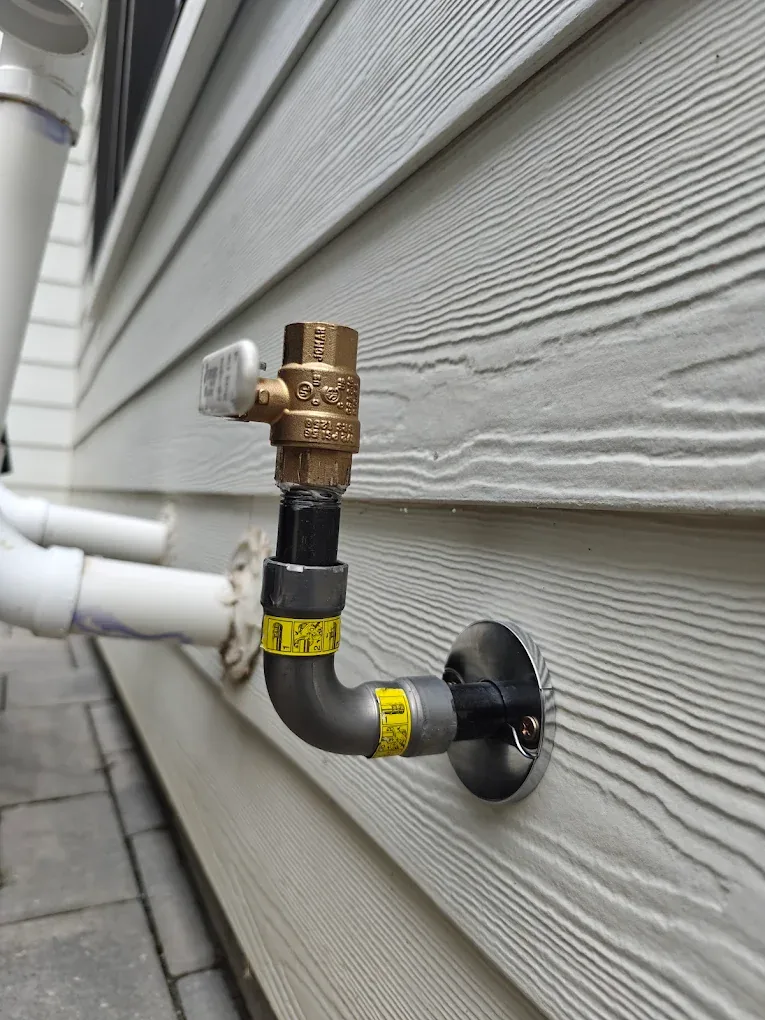
What Is Backflow Testing? NJ Rules Explained
Backflow testing explained for NJ. Who must test, the annual NJDEP mandate, RPZ/DCVA, and the Certificate of Compliance. Call (908) 376-9159.
Read the guide
Frozen Pipe? What to Do Right Now
Frozen pipe? Step-by-step on what to do right now to prevent a burst, and when to call a 24hr Sun-Fri NJ plumber. Call (908) 376-9159.
Should You Repair or Replace Your Water Heater?
When to repair vs replace a water heater in NJ, age, cost and safety rules of thumb from a licensed plumber. Call (908) 376-9159.