
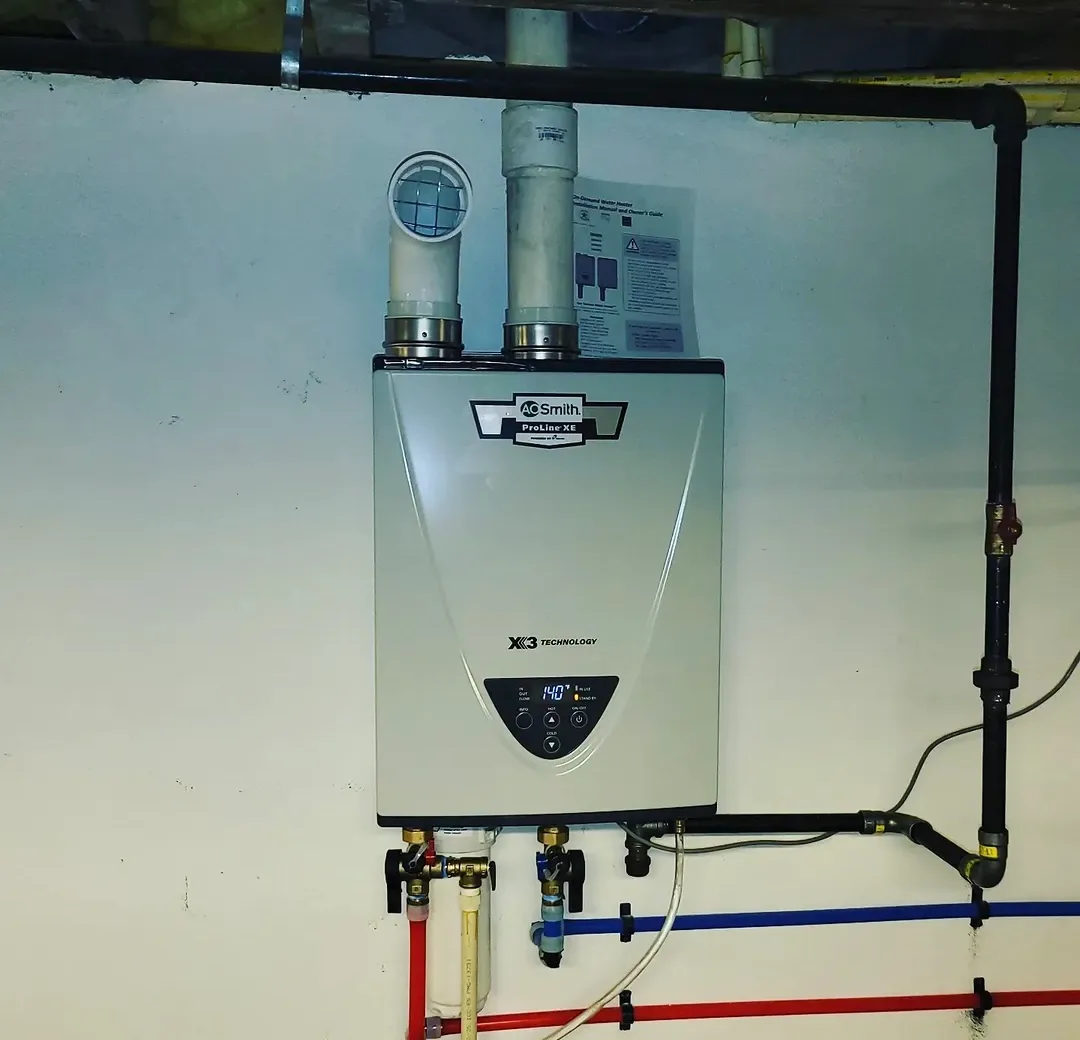
NJ plumbing & heating guide
Should You Repair or Replace Your Water Heater?
When to repair vs replace a water heater in NJ, age, cost and safety rules of thumb from a licensed plumber.
Licensed NJ Master Plumber #13345 · 4.9★ (294 Google reviews)
By Morey Katzourin · NJ Master Plumber License #13345· Bonded & insured
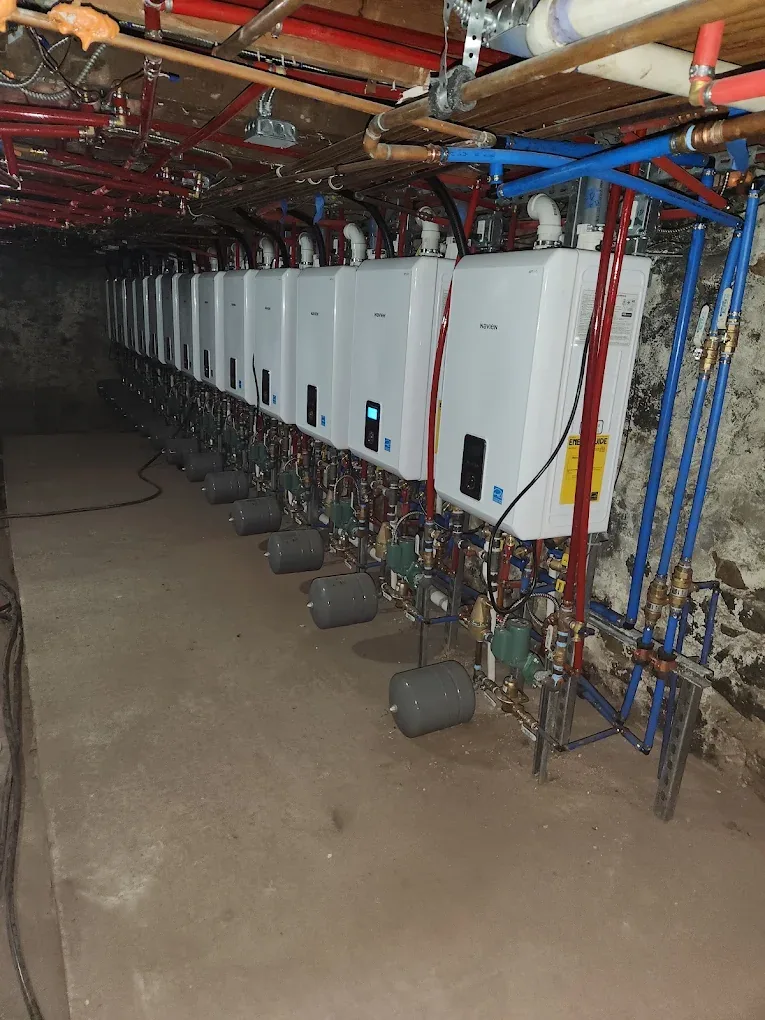
Should you repair or replace your water heater? Repair a newer unit with a minor fault. Replace one that is over about ten years old, leaking from the tank body itself, or facing a repair that costs close to half the price of a new unit. That is the short version, and this guide is honest about the times repair is the smarter call, because plenty of homeowners get talked into a replacement they did not need. There is one field test that decides it faster than any checklist. Where the water is coming from. A drip at a fitting is usually a cheap fix. Water pooling from the bottom of the tank shell is a corroded tank, and no repair fixes that. We are a licensed NJ master plumber (License #13345), bonded and insured, and we will tell you which one you are looking at before you spend a dollar.
Should You Repair or Replace Your Water Heater? (The Quick Answer)
Replace your water heater if it is past about ten years old, leaking from the tank body, or the repair approaches half the cost of a new unit. Repair it if it is under that age and the problem is a single part, a thermocouple, a valve, an element, or a thermostat. The decision comes down to three things stacked together. Age, symptom, and repair cost relative to replacement. When two of the three point the same way, you have your answer.
How Long Does a Water Heater Last?
A conventional storage tank water heater lasts about 10 to 15 years, and a tankless unit lasts 20 or more, according to the U.S. Department of Energy. That is the textbook range. Northern NJ reality runs a little shorter.
Harder water shortens tank life, and a lot of NJ tanks fail closer to 8 to 10 years than the 12 you might hope for, especially when nobody ever touched the anode rod. The anode rod is the sacrificial metal that corrodes so the tank does not. Once it is spent, the tank starts eating itself, and in a hard-water area that clock runs faster. Most homeowners never even know the rod exists until a plumber points at it.
There is a second NJ wrinkle. In older homes the water heater usually lives in an unheated basement or a back utility room, out of sight. A slow tank leak in that spot can run for weeks before anyone notices, sometimes not until there is standing water on the floor. If your unit is down there and it is getting older, it is worth a look every few months.
You can buy time. Draining a few gallons off the bottom once a year clears the sediment that bakes onto the burner, and checking the anode rod every three or four years lets you swap a $30 part instead of losing the whole tank. Most homeowners in towns like Maplewood and Bloomfield never do either, which is a big reason the local failures cluster at the 8-to-10-year mark. Maintenance does not make a tank immortal, but on a unit that has been ignored, that neglect is often the whole story behind an early replacement.
Repair vs. Replace. A Side-by-Side
Here is how the common symptoms actually sort out. Cost figures are typical NJ market ranges, not a Maccabi quote, and every situation is a little different.
| Symptom | Likely cause | Repair or replace | Typical NJ range |
|---|---|---|---|
| No hot water, gas unit | Thermocouple or pilot assembly | Repair (if unit is sound) | Lower-cost repair |
| No hot water, electric unit | Heating element or thermostat | Repair (if unit is sound) | Lower-cost repair |
| Water pooling under the tank shell | Corroded tank | Replace, always | New unit + install |
| Drip at a valve or connection | Loose fitting or T&P valve | Repair, usually cheap | Minor repair |
| Rusty or discolored hot water | Corrosion inside the tank | Replace if persistent | New unit + install |
| Rumbling or popping noise | Sediment buildup | Flush. Replace if old | Flush, or new unit |
| Not enough hot water | Sediment, dip tube, or undersized | Repair or resize | Varies |
| Any of the above on a 10-plus-year unit | End of service life | Lean replace | New unit + install |
The table does most of the work, but the tank-body-leak row is the one to burn into memory. A leaking tank shell is terminal every time.
Signs Your Water Heater Is Failing
The clearest sign a water heater is failing is water pooling from the bottom of the tank itself, that is a corroded shell and it is always a replacement. Beyond that, watch for these
- Rusty or discolored hot water that clears on the cold side. That is corrosion inside the tank, not in your city supply.
- Rumbling, popping, or crackling when it heats. Sediment has built up on the bottom and the burner is working through a layer of scale. It kills efficiency and, eventually, the tank.
- A pilot that will not stay lit on a gas unit. Often a thermocouple, which is a cheap fix on a younger tank.
- Not enough hot water or it runs cold fast. Could be sediment, a broken dip tube, or a tank that is simply undersized for the household.
- Age over ten years. On its own it is not a death sentence, but it lowers the bar for replacing when something else goes wrong.
Here is the distinction people get wrong and panic over. A leak at a fitting, a valve, or a connection is usually a straightforward repair. A leak from the seam or bottom of the tank shell is not, no sealant or part brings a rusted-through tank back. Before you spend on a replacement, make sure someone has actually confirmed where the water is coming from.
The 50% Rule (and When to Ignore It)
The 50% rule says replace rather than repair when the repair cost approaches roughly half the price of a new unit, or when the unit is already past its expected life. It is standard industry and consumer guidance (Consumer Reports and general trade practice), and it is a good gut check. Spending $600 to nurse a 12-year-old tank that owes you nothing rarely makes sense when a new one is not far off.
But the rule cuts both ways, and this is where honest guidance matters. On a four-year-old tank in good shape, a $150 thermocouple or a new element is money well spent, that unit has years left. Do not let anyone use the 50% rule to sell you out of a repair that clearly wins. Age is half the equation. A cheap fix on a young, otherwise-sound unit beats a new install every time.
Call (908) 376-9159 and we will walk you through your specific unit.
When Replacing, Should You Go Tankless?
If you are replacing anyway, tankless is worth a real look, but it is not automatically the right answer. The honest trade-offs
- Endless hot water and a smaller footprint. A tankless heats on demand, so it never runs out and it frees up the floor space a tank takes.
- Longer life. Tankless units last 20-plus years versus 10 to 15 for a tank (DOE), so the lifetime math can favor it.
- Higher upfront cost. Both the unit and the install run more, and older homes sometimes need gas line or venting upgrades to feed one properly.
- Sizing matters. Undersize it and you will not get enough flow for two showers at once. This is where a proper load calculation earns its keep.
We are Navien Certified, which is the manufacturer training behind tankless and high-efficiency installs, so if you want to weigh it out we can size it honestly rather than sell you the biggest box. Read more on tankless water heater installation if you are leaning that way.
What NJ Homeowners Should Know Before Replacing
New Jersey requires a plumbing permit to replace a water heater, and that matters for your decision. Under the NJ Uniform Construction Code (N.J.A.C. 5:23), a water heater swap is permitted work with an inspection, so a legitimate replacement is not a same-hour, no-paperwork job. A licensed plumber pulls the permit and the inspector confirms the venting, connections, and relief-valve discharge are right. If a price sounds too cheap, ask whether a permit is included, because skipping it can bite you at resale. We cover the full process in our guide to whether you need a permit to replace a water heater in NJ.
Three more things worth knowing. Newer units meet tighter federal efficiency standards, so a replacement generally costs less to run than the 12-year-old unit it retires (DOE and EPA ENERGY STAR). High-efficiency and heat-pump water heaters may qualify for money back through the NJ Clean Energy rebates for water heaters and boilers, which can change the replace math in your favor. And a closed system with a pressure reducing valve at the meter, common in newer NJ installs, needs a thermal expansion tank on the new heater, so budget for that if yours is missing. For real numbers, see our breakdown of water heater replacement cost in NJ.
FAQ
Frequently asked questions
24-hour, Sun–Fri availability
Not seeing your question? Call or text and a licensed plumber will talk it through, no answering service run-around.
Call or Text (908) 376-9159A conventional storage tank water heater lasts about 10 to 15 years, and a tankless unit 20 or more, per the U.S. Department of Energy. In NJ's harder-water areas, tanks often reach only 8 to 10 years, especially without anode-rod maintenance. Past that age, replacement usually beats repair.
Keep reading
More NJ plumbing & heating guides
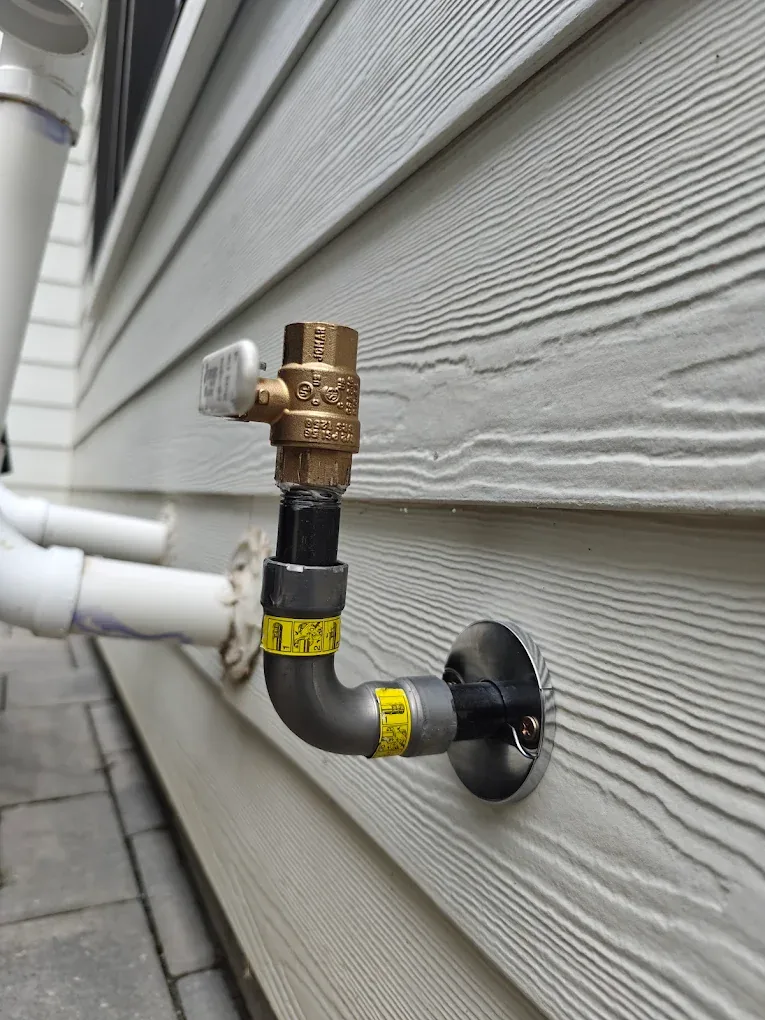
What Is Backflow Testing? NJ Rules Explained
Backflow testing explained for NJ. Who must test, the annual NJDEP mandate, RPZ/DCVA, and the Certificate of Compliance. Call (908) 376-9159.
Read the guide
Frozen Pipe? What to Do Right Now
Frozen pipe? Step-by-step on what to do right now to prevent a burst, and when to call a 24hr Sun-Fri NJ plumber. Call (908) 376-9159.
Why Sump Pumps Fail During Storms
Why sump pumps fail during NJ storms, power loss, stuck floats, overload, and how backups prevent flooding. Read the full guide.