
NJ plumbing & heating guide
How to Shut Off Your Water Main
How to find and shut off your home's water main in an emergency, step by step, before the plumber arrives.
Licensed NJ Master Plumber #13345 · 4.9★ (294 Google reviews)
By Morey Katzourin · NJ Master Plumber License #13345· Bonded & insured
To shut off your home's water, find the main shutoff valve where the water line enters the house, usually in the basement, crawlspace, or near the water meter, and turn a gate valve fully clockwise or a ball-valve handle a quarter turn until it stops. Then open a low faucet to relieve pressure. If the valve won't move, don't force it, close the fixture shutoffs and call a plumber.
That's the whole answer if water is spraying and you found this on your phone one-handed. Water still leaking? Call a NJ plumber now at (908) 376-9159. Everything below is the detail. Where the valve hides in older northern-NJ homes, how to tell a gate valve from a ball valve, and the seized-valve trap common in pre-1950 houses.
Speed matters more than people realize. FEMA estimates that just one inch of water in a home can cause about $25,000 in damage (floodsmart.gov). The minutes you spend hunting for a valve are the minutes water wicks into drywall, subfloor, and finished basement.
In northern NJ, the reason most people go looking for this valve is winter. A pipe that freezes in an unheated wall or a drafty crawlspace splits, and when it thaws it floods. Burst frozen pipes are the most common reason homeowners scramble for the main shutoff around here, and January is a terrible time to learn where it is for the first time. Find it now, in daylight, with dry hands, so you know where to go if a pipe lets go at 2 a.m. in a cold snap.
How to Shut Off Your Water Main (Step by Step)
Follow these five steps in order
- Find the main shutoff valve. Look where the water line enters your home, typically an interior basement or crawlspace wall facing the street, often right beside the water meter. It's a valve on the main pipe before it branches off to the rest of the house.
- Identify the valve type. A round handle you turn like a spigot is a gate valve. A single straight lever is a ball valve. This tells you how to turn it.
- Turn it off. For a gate valve, turn the wheel fully clockwise (righty-tighty) until it stops. For a ball valve, rotate the lever a quarter turn until it sits perpendicular to the pipe.
- Relieve the pressure. Open the lowest faucet in the house, a basement utility sink or an outdoor hose bib, and a faucet upstairs. This drains the standing water in the lines so a burst pipe stops feeding.
- Confirm the flow stopped. Watch the leak. If it slows to a trickle and dies, you're done. If it keeps running hard, the valve may not be seating, and you move to the "valve won't turn" plan below.
Where Is the Main Shutoff Valve?
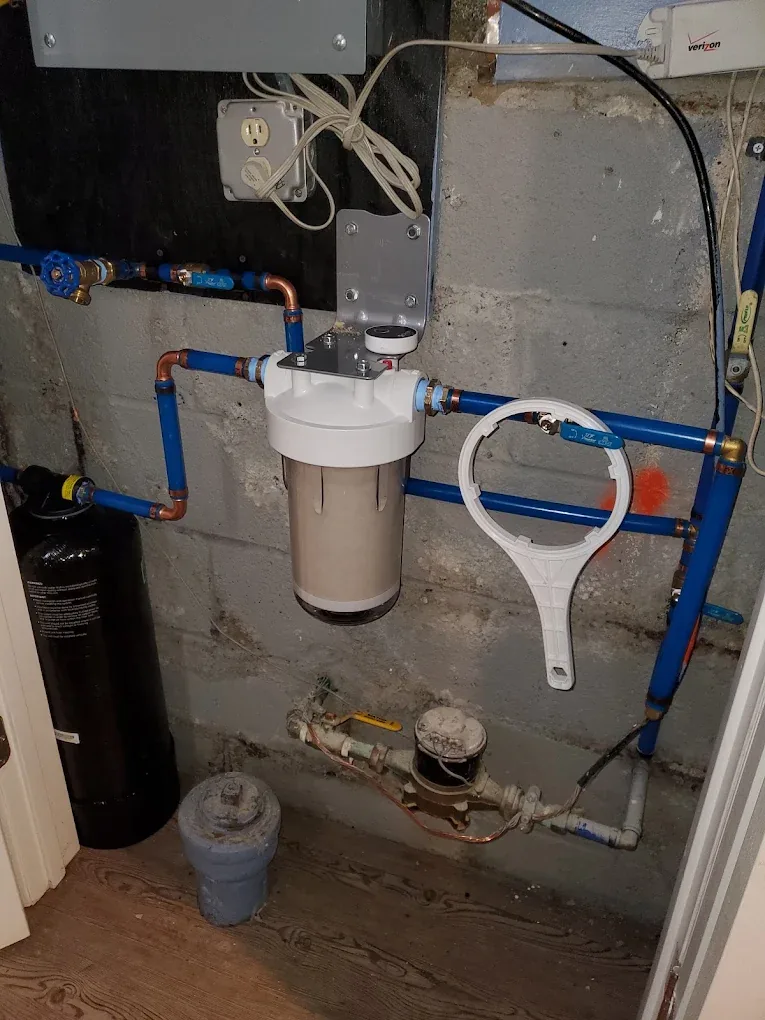
The main shutoff valve is almost always where the water line enters your home from the street side. In northern NJ basements, that's usually a valve on the incoming pipe near the foundation wall, often within a few feet of the meter. In a home on a slab or with a crawlspace, check near the water heater or in the crawlspace along the front wall.
There are two shutoffs on your service line, and this trips people up. The one inside is yours to operate. The other is the curb stop, a valve at the property line inside a curb box (a small metal lid in the lawn or sidewalk). The curb stop belongs to the water utility, needs a special curb key to reach, and is not the one you use in an everyday emergency. We'll come back to who turns what.
If you take nothing else from this page, find your interior valve today and tag it before you need it. Searching for a shutoff while water sprays across a finished basement wastes the exact minutes that cost you.
Gate Valve vs. Ball Valve. How to Turn Each
The difference is simple once you see it. A ball valve has a single lever handle. Off is a quarter turn, lever crosswise to the pipe. On is lever in line with the pipe. Quarter-turn valves are newer, more reliable, and rarely seize. A gate valve has a round wheel handle and works like an outdoor spigot. Many turns clockwise to close, many turns counterclockwise to open. Gate valves are what you'll find in most older NJ homes.
There is a reason for the design difference. A ball valve closes by rotating a drilled sphere across the flow, so one quarter turn takes it from fully open to fully sealed with almost nothing to wear out. A gate valve lowers a metal wedge, the "gate," down across the pipe over many turns, and that gate and the threaded stem that drives it are what corrode, crumble, and seize after decades in NJ water. In short. Fewer moving parts under water means fewer things to fail.
Why does the type matter beyond how you turn it? Because ball valves almost always work when you need them, and old gate valves often don't. If your shutoff is a gate valve, that is worth knowing on a calm afternoon, not in the middle of a flood.
If the Valve Won't Turn (Old NJ Homes)
If the main shutoff valve won't turn, stop and do not force it. This is the single most important warning on this page. In pre-1950 homes across West Orange, Montclair, Bloomfield, and Passaic, the interior main is frequently a decades-old gate valve, and those valves seize. The stem corrodes, the internal gate crumbles, and the handle either won't budge or spins uselessly. Force it and the valve can snap off in your hand, turning a manageable leak into an uncapped main flooding the basement.
Here's the correct move when the main won't cooperate
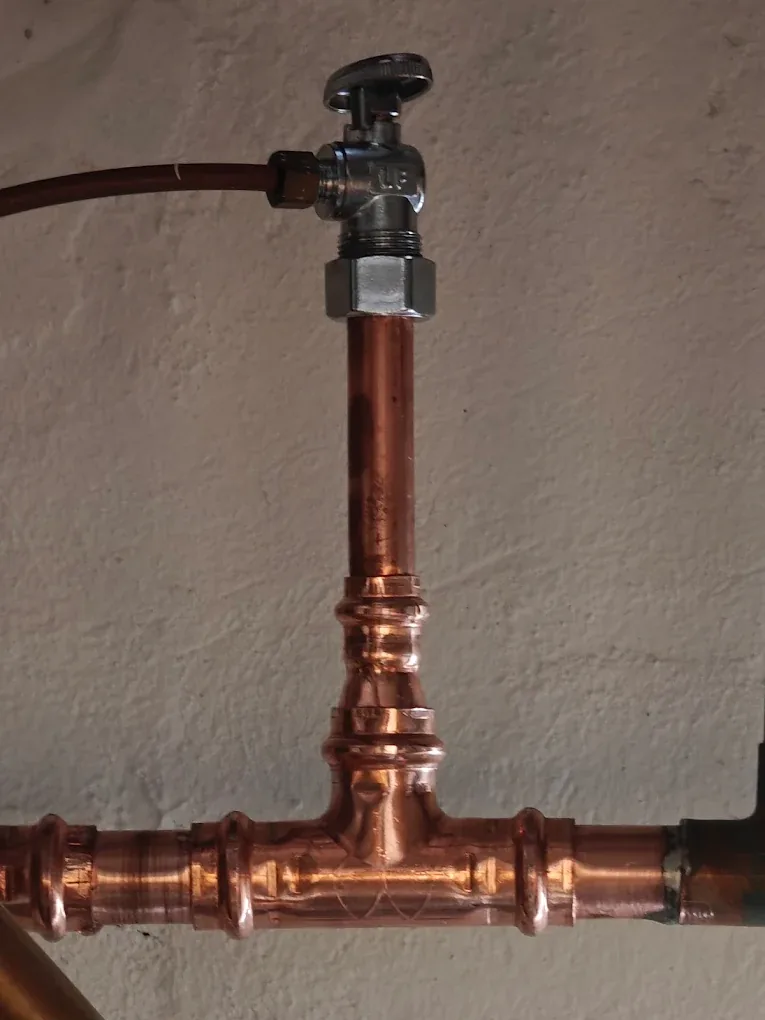
- Triage at the fixture first. If the leak is at one spot (a burst supply line under a sink, a failed toilet fill valve, a washing-machine hose), close the small shutoff valves right at that fixture. Most sinks and toilets have their own shutoffs on the wall behind them. That stops a local leak without touching the main.
- If the whole house needs shutting and the main is seized, call the water utility to shut the curb stop, and call a licensed plumber.
- Plan to replace the seized valve once the emergency is handled. A frozen main shutoff is a ticking problem. The next emergency will find it just as stuck. We handle main water line and valve replacement and can swap a failing gate valve for a modern quarter-turn ball valve.
A seized valve is not a personal failure. It's what 60 or 70 years of NJ water does to old brass. But it's exactly why national "3 easy steps" articles fall apart. They assume a working modern valve that always turns.
Interior Valve vs. Curb Stop. Who Turns What
You turn the interior valve. The utility turns the curb stop. That's the boundary, and it matters because homeowners who try to operate the curb stop in a panic can damage it or the meter, leaving you dealing with the water company on top of the leak.
The curb stop sits in the curb box at your property line and usually requires a long curb key to reach and turn. In much of northern NJ, that valve and the meter are the utility's property, and their guidance is to call them rather than operate it yourself. Providers such as NJ American Water and Passaic Valley Water Commission publish "how to find your shutoff" guidance and curb-stop policies for exactly this reason. Use your interior valve for emergencies. Call the utility only if the interior valve has failed and the whole property must be shut down at the street.
What to Do After the Water Is Off
Once the water is stopped, a few things matter in order
- Relieve the pressure and stop the flow at the source. If you shut the main but a fixture is still dripping, open low faucets to drain the lines, then close the fixture shutoffs on the broken pipe or appliance.
- Document everything for insurance before you clean up. Photograph and video the standing water, the ruined drywall, the affected belongings, and the pipe or valve that failed. Insurers pay on evidence, and a wet-vac at 3 a.m. erases it.
- Start removing water fast. Standing water keeps wicking upward into wall cavities and subfloor long after the leak stops. Mopping is not drying. A finished basement usually needs extraction and air movers to avoid mold.
- Call a licensed plumber to fix the actual cause. Do not cap it and turn the water back on. Household leaks waste nearly 900 billion gallons of water a year nationwide, and small leaks escalate into major damage when ignored (EPA WaterSense, epa.gov), so a "small" drip that made you shut the main still deserves a real repair.
- Leave the water off until the repair is done and pressure-tested. Restoring pressure to a line that is not fully fixed just floods you a second time.
If the leak was on a sewer or drain line rather than a supply line, the signs and fixes are different. It's worth knowing the signs your sewer line is broken so you can tell a supply emergency from a drainage one.
FAQ
Frequently asked questions
24-hour, Sun–Fri availability
Not seeing your question? Call or text and a licensed plumber will talk it through, no answering service run-around.
Call or Text (908) 376-9159It's usually where the water line enters your home, in the basement, a crawlspace, or near the water meter, often on an interior wall facing the street. In older northern-NJ homes it's frequently a round-handled gate valve close to the foundation. Find and tag it before an emergency, because searching for it while water is spraying wastes critical minutes.
Keep reading
More NJ plumbing & heating guides
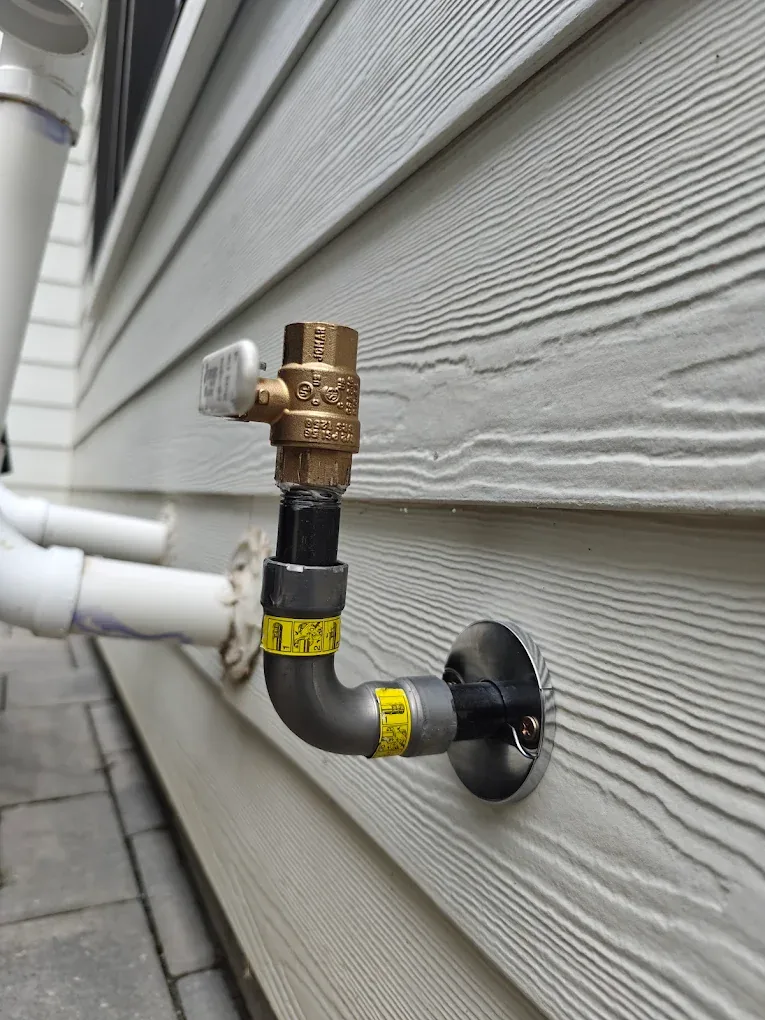
What Is Backflow Testing? NJ Rules Explained
Backflow testing explained for NJ. Who must test, the annual NJDEP mandate, RPZ/DCVA, and the Certificate of Compliance. Call (908) 376-9159.
Read the guide
Frozen Pipe? What to Do Right Now
Frozen pipe? Step-by-step on what to do right now to prevent a burst, and when to call a 24hr Sun-Fri NJ plumber. Call (908) 376-9159.
Should You Repair or Replace Your Water Heater?
When to repair vs replace a water heater in NJ, age, cost and safety rules of thumb from a licensed plumber. Call (908) 376-9159.