
NJ plumbing & heating guide
Repiping an Old House in NJ. Galvanized to Copper or PEX
Why old NJ homes need repiping, the trouble with galvanized pipe, and choosing copper vs PEX. Read our licensed-plumber guide.
Licensed NJ Master Plumber #13345 · 4.9★ (294 Google reviews)
By Morey Katzourin · NJ Master Plumber License #13345· Bonded & insured
Most homeowners who repipe an old house in NJ do it because the galvanized steel supply lines the house was born with have finally run out of road. Those pipes were the standard in the 1920s-1950s colonials and capes across West Orange, Montclair, Maplewood, and the Caldwells, and a lot of them are still in the walls today. Here is the part almost no one explains. Galvanized pipe corrodes from the inside out, so water pressure drops long before you ever see a leak. By the time a pinhole shows up, the rest of the system is usually on the same clock. This guide walks through why galvanized fails, how to spot it, and the real trade-offs between copper and PEX so you can make the call before a licensed NJ plumber ever quotes the job.
Do You Need to Repipe an Old NJ House?
Repipe an old NJ house when you see the classic galvanized-failure signs together. Water pressure that keeps dropping (worse on the second floor), rusty or brown first-draw water, and repeated pinhole leaks on the old lines. Galvanized steel in pre-1970 homes is typically 60 to 100 years old and past its service life. A licensed plumber can confirm whether targeted repair or a full repipe is the smarter money.
If you are staring down a refinance or a sale, this often surfaces at inspection. An inspector flags corroded supply lines, pressure comes up short at the upstairs fixtures, and suddenly a "someday" project has a deadline attached.
Why Galvanized Pipe Fails in Older NJ Homes
Galvanized steel pipe fails because the protective zinc coating that gives it its name erodes over time, and once the bare steel underneath is exposed, it rusts. That rust does two things. It flakes off into your water (the brown you see at the first-morning tap), and it builds up as scale on the inside wall of the pipe. Year after year, that scale narrows the bore, so a half-inch pipe can end up with the effective opening of a coffee stirrer. Cut open a 70-year-old galvanized nipple and you can see it, a ring of rust closing in from all sides with a pinhole of daylight in the middle.
That is the whole reason pressure fades before anything leaks. The pipe is choking itself shut. It also explains a mistake I see constantly. Someone replaces the one section that finally leaked, and within a year another joint downstream goes. The old runs are all the same age, all scaled, all fragile, and when you open the flow by swapping one piece, you push more water and more corrosion pressure onto the sections you left in place.
Galvanized water pipe has a typical service life of roughly 40 to 70 years before corrosion narrows the bore and causes failures, so pipe installed in a pre-1970 NJ home is at or beyond the end of that window (plumbing-industry and building-science service-life data).
There is a water-quality angle too, and it is worth taking seriously. The U.S. Environmental Protection Agency, under its Lead and Copper Rule guidance, notes that older galvanized pipe can accumulate lead that adsorbed onto its interior surface over the years, especially in homes that also had lead service lines or lead solder, and can later release it back into the water. Northern NJ's older housing stock frequently pairs galvanized supply with lead solder or lead components from the same era. That is not a scare tactic. It is a documented reason the EPA treats aging galvanized as a replacement candidate, not just a plumbing nuisance.
Signs Your Home Needs Repiping
You rarely get one dramatic sign. You get a pattern that builds over a few winters. Watch for these
- Water pressure that keeps dropping, and is noticeably worse upstairs than at the basement laundry tub. Scale narrows the top-floor runs first.
- Rusty, brown, or yellow first-draw water, particularly after the house has sat overnight and the water has been standing in the pipe.
- Repeated pinhole leaks on the old lines, one after another over a season or two. This is the tell that the whole system is failing, not one bad spot.
- Visibly corroded or scaled pipe where you can see it, in the basement or crawl space, with rust blooms or crusty buildup at the threaded joints.
- Discolored fixtures and staining in tubs and sinks from iron in the water.
- A repair that solves nothing because the next leak shows up three houses of pipe away.
If you are chasing hidden leaks inside finished walls, professional leak detection for hidden pinhole leaks can pinpoint them without opening every bay, which tells you how widespread the failure really is before you decide on scope.
Copper vs PEX. Which Repipe Material Is Better?
Both copper and PEX are good repipe materials, and honestly, anyone who tells you one is always right is selling something. The best choice depends on your budget, your home's layout, and your water conditions. Here is the straight comparison.
| Factor | Copper | PEX (cross-linked polyethylene) |
|---|---|---|
| Material cost | Higher. Price tracks the copper commodity market | Lower, often meaningfully so |
| Install labor | Slower. Every joint is soldered or pressed | Faster. Long flexible runs with far fewer joints |
| Longevity | Very long. Decades of proven service | Long service life. A newer material but well-proven |
| Freeze tolerance | Rigid, splits when water freezes and expands | Flexible, tolerates freeze expansion far better |
| Water chemistry | Can suffer pinholing in aggressive or acidic water | Immune to the corrosion that kills metal pipe |
| Install disruption | More wall opening to run rigid pipe and fittings | Less. Snakes through cavities like wiring |
| Where it shines | Exposed runs, high-heat spots, owners who want metal | Retrofitting old homes with tight, finished walls |
PEX meets ASTM F876 and F877 standards and resists freeze-bursting better than rigid copper, which matters a lot in a NJ winter (ASTM material standards and PEX manufacturer specifications). For repiping an old Montclair colonial with plaster walls and no easy chases, PEX usually wins on disruption and cost. For a homeowner who wants metal on exposed basement runs or near the water heater, copper still earns its keep. Plenty of jobs use both.
Ask a licensed plumber about repiping call (908) 376-9159 and describe what you are seeing before you commit to anything.
What a Whole-House Repipe Involves (Scope and Timeline)
A whole-house repipe replaces the supply piping from where the water enters the home out to every fixture. It is a significant job, but a routine one for a crew that does it regularly. Most homes take a few days start to finish. The plumber maps the runs, opens access points in drywall or plaster to reach the lines, runs the new copper or PEX, ties in every fixture, pressure-tests the system, and then the walls get patched. Expect short water-off windows during the tie-ins rather than days without water.
Older NJ towns require a plumbing permit and inspection for this kind of work, which is a good thing, since it means the job gets checked by the local code official. Pricing runs as a range that depends on home size, number of bathrooms, pipe material, and access, and I am not going to pin a number on it here because it varies too much to be honest about in a blog. For real figures, see our breakdown of repipe cost in NJ, and treat any online per-square-foot number as a starting point, not a quote.
If the failing pipe includes the buried supply from the street, that is a separate scope, main water line replacement, and it is worth confirming whether the corrosion stops at the house or starts at the curb.
Repair a Section vs Repipe the Whole House
Repair a single section only when the rest of the system is genuinely sound, which, with old galvanized, it usually is not. This is the honest decision most cost pages skip. A spot repair on galvanized buys you months, not years, because you are patching one link in a chain of pipe that is all the same age and all internally scaled. Worse, opening the flow at the new section pushes more water velocity into the neighboring old runs and can accelerate the next failure.
The math tips toward a full repipe once you have had two or more leaks on the old lines, or when pressure has dropped enough that fixtures underperform. You stop paying for repeat service calls and drywall patches, and you get a system that will outlive you. If your pipe is copper or PEX and you have one isolated leak, repair it. If it is galvanized and it is failing in more than one place, repiping is almost always the smarter money.
Who Handles Repiping in NJ?
Maccabi Plumbing & Heating is a licensed NJ plumbing contractor (NJ Master Plumber License #13345), bonded and insured, based at 300 Executive Drive in West Orange and serving 22 towns across Essex, Passaic, Morris, Bergen, and Union counties. We handle whole-house repiping in NJ from the assessment through the final inspection, and we are straight with homeowners about whether you need a repair or the full job.
One more reason to repipe old galvanized. Freeze risk. Scaled, corroded pipe near an exterior wall is more likely to split in a hard NJ freeze, and repiping to PEX or copper permanently removes both the corrosion and a lot of the freeze-split vulnerability. If winter is on your mind, our guide to preventing frozen pipes in older NJ homes covers the rest.
Get a NJ repiping assessment book a repiping evaluation or call (908) 376-9159 (call, text, or WhatsApp). We answer 24-hour, Sunday to Friday. We are closed Saturday.
FAQ
Frequently asked questions
24-hour, Sun–Fri availability
Not seeing your question? Call or text and a licensed plumber will talk it through, no answering service run-around.
Call or Text (908) 376-9159Repipe when you see the classic galvanized-failure signs. Dropping water pressure (worse upstairs), rusty or brown first-draw water, repeated pinhole leaks, and visibly corroded pipe. Galvanized steel in pre-1970 NJ homes is typically 60 to 100 years old and past its service life. A licensed plumber can inspect and confirm whether repair or a full repipe makes sense.
Keep reading
More NJ plumbing & heating guides
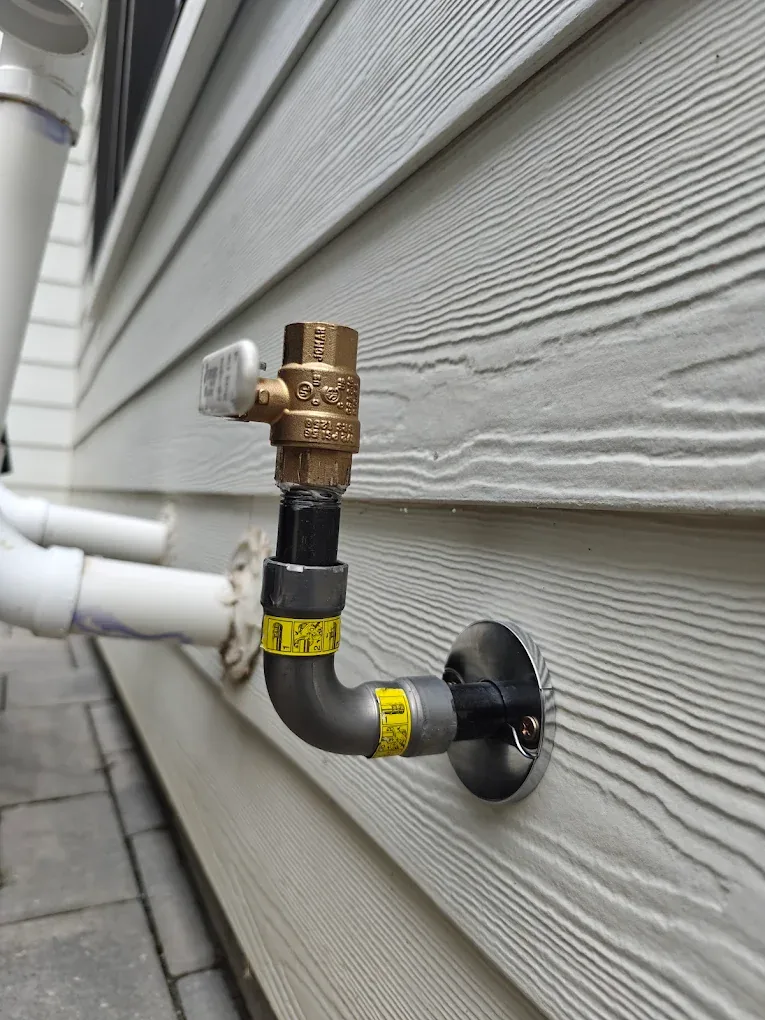
What Is Backflow Testing? NJ Rules Explained
Backflow testing explained for NJ. Who must test, the annual NJDEP mandate, RPZ/DCVA, and the Certificate of Compliance. Call (908) 376-9159.
Read the guide
Frozen Pipe? What to Do Right Now
Frozen pipe? Step-by-step on what to do right now to prevent a burst, and when to call a 24hr Sun-Fri NJ plumber. Call (908) 376-9159.
Should You Repair or Replace Your Water Heater?
When to repair vs replace a water heater in NJ, age, cost and safety rules of thumb from a licensed plumber. Call (908) 376-9159.