
NJ plumbing & heating guide
Steam Boiler vs Hydronic Heating. Which Is Better?
Steam boiler vs hydronic heating compared for NJ homes, efficiency, comfort and cost. See which suits an older house and read more.
Licensed NJ Master Plumber #13345 · 4.9★ (294 Google reviews)
By Morey Katzourin · NJ Master Plumber License #13345· Bonded & insured
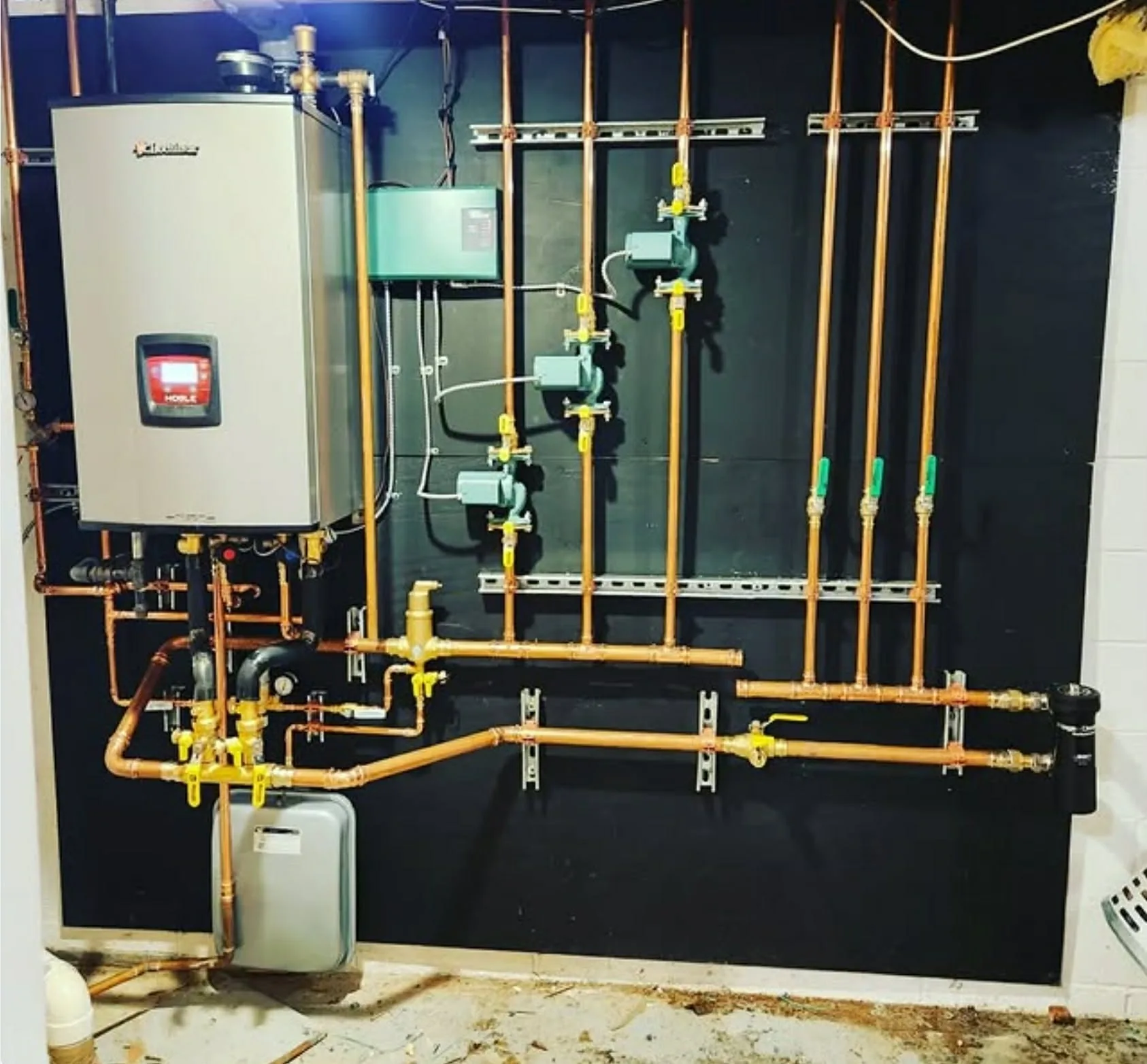
The steam boiler vs hydronic question does not have one right answer, and anyone who gives you one without seeing your house is selling something. Both are boiler systems that heat water and send that heat to radiators. The difference is what they send. Steam pushes itself up through the pipes as vapor, while a hydronic (hot-water) system keeps the water liquid and a pump circulates it. Hydronic is more efficient, quieter, and easier to zone, so it wins for new systems and renovations. But if you own a pre-1950 colonial in West Orange, Montclair, or Passaic with a sound cast-iron steam system, converting is often the wrong money. The efficiency payback on a full conversion runs many years, and a modern steam boiler with good venting closes much of the gap for a fraction of the cost. We service both, so we have no reason to steer you toward the bigger job.
Steam Boiler vs Hydronic. Which Is Better?
Neither system is universally better, and the honest rule of thumb depends on what you already have. For a new build or a gut renovation, hydronic hot-water heat is the better choice on efficiency, comfort, and zoning. For an older NJ home with a working cast-iron steam system, keeping and rebalancing that system usually beats converting once you factor in the cost of new piping and emitters.
Quick Comparison Table
| Feature | Steam Boiler | Hydronic (Hot Water) |
|---|---|---|
| How it distributes heat | Boils water to steam. Steam rises through pipes by its own pressure | Heats water. A circulator pump moves it through a closed loop |
| Operating temperature | 212°F and above (must boil) | Roughly 120 to 180°F |
| Efficiency (AFUE) | Older atmospheric units often well below 85% | Condensing models reach roughly 90 to 98.5% AFUE |
| Comfort / evenness | Even, gentle radiant warmth once up to temp. Slower to start | Steady, controllable. Faster response |
| Zoning | Difficult. Usually whole-house | Easy. Multiple zones with zone valves or circulators |
| Noise | Water hammer risk if pitch or venting is off | Generally quiet. Occasional pump hum |
| Typical NJ home | Pre-1950 colonials and multifamily (one-pipe steam) | Newer builds and renovated homes. Baseboard |
| Common issues | Water hammer, clogged main vents, low water line | Circulator failure, air in loop, bad zone valve |
| Retrofit / upgrade path | New boiler on existing pipes. Rebalance venting | Swap to high-efficiency condensing boiler |
| Works with central AC | No ducts. AC is separate | No ducts. AC is separate |
How Each System Works (In Brief)
A steam boiler heats water until it boils into low-pressure steam, and that steam rises through the pipes on its own, no pump needed. It reaches the radiators, gives up its heat, condenses back to water, and drains down to the boiler to be heated again. Most older NJ homes run one-pipe steam, where the same pipe carries steam up and condensate back. If you want the full walkthrough, we cover how a steam boiler works in plain English.
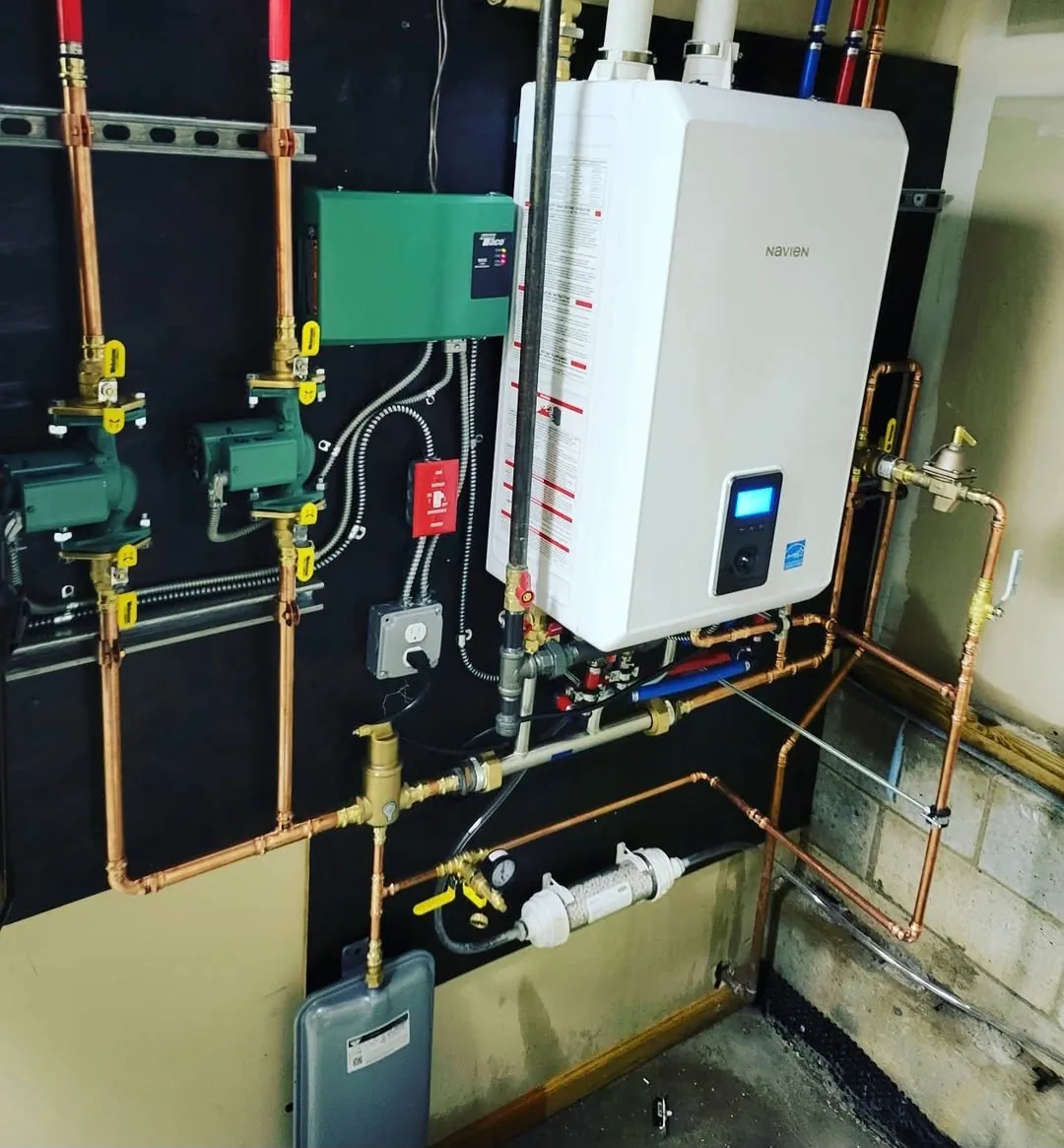
A hydronic system never lets the water boil. The boiler warms it to somewhere around 120 to 180°F, and a circulator pump pushes it through a closed loop to baseboard, radiators, or radiant floor tubing, then back to the boiler. Because a pump does the moving, you can split the house into zones that each call for heat on their own thermostat. Our guide to what hydronic heating is goes deeper on the loop and the emitters.
Efficiency and Operating Cost
Efficiency is where hydronic pulls ahead, and the physics explains why. Steam has to heat water past the boiling point, 212°F and up, while a hydronic system circulates water at much lower temperatures, roughly 120 to 180°F (U.S. Department of Energy, Energy Saver, Boiler Systems). Less energy spent reaching a lower target temperature means more of your fuel becomes usable heat.
Boilers are rated by AFUE, or Annual Fuel Utilization Efficiency, and high-efficiency condensing hydronic boilers reach roughly 90 to 98.5% AFUE, while older atmospheric steam and hot-water boilers commonly run well below that (DOE and ENERGY STAR boiler ratings). That gap is real, but do not read it as "steam is hopeless." A neglected steam system leaking heat through un-insulated pipes and failed vents performs far below its potential. Replace an ancient steam boiler with a properly sized modern one, insulate the mains, and fix the venting, and you recover a large share of that efficiency without touching the radiators. If you are weighing a full swap, our boiler replacement in NJ page walks through the options.
Comfort, Noise, and Zoning
Steam heat has a quality a lot of homeowners genuinely love. Cast-iron radiators hold heat and give off an even, radiant warmth that many people find more comfortable than forced air. The trade-off is control. Steam is hard to zone, so you are mostly heating the whole house at once, and it takes longer to come up to temperature on a cold morning.
Hydronic wins on precision. Zone valves let you keep bedrooms cooler than living areas, and the system responds faster. On noise, hydronic is usually quiet aside from an occasional pump hum. Steam's noise risk is water hammer, that startling bang in the pipes, and it is not the boiler failing. It is trapped condensate that cannot drain back because a pipe sagged, the pitch is wrong, or a main vent clogged. A steam-literate plumber fixes the cause. A generalist tops up the water and leaves it banging.
Should You Convert Steam to Hydronic? (NJ Old-Home Reality)
Here is the part most contractors will not tell you. Converting a working one-pipe steam system to hydronic is rarely worth it for efficiency alone. A real conversion means a new boiler, new piping run throughout the house, and often new emitters, because steam radiators and hydronic radiators are not interchangeable in a simple swap. That is a major job, and the efficiency savings typically take many years to pay back the conversion cost. Meanwhile a modern steam boiler plus proper venting and insulation narrows the gap for far less.
There is also a point homeowners fixate on that changes the math. Neither system has ductwork. So if you are dreaming of central air, adding AC is a separate expense either way, and it does not favor one heating system over the other. That reframes a lot of "should I convert for efficiency" conversations.
When does conversion actually make sense? If you are already gutting the house down to the studs, running new pipe is far cheaper as part of that work. If the steam system is failing wholesale, boiler and piping both shot, the incremental cost to go hydronic shrinks. And NJ Clean Energy and utility rebates favor high-efficiency condensing boilers, which can nudge a replacement decision toward hydronic. Check the current NJ Clean Energy Program incentives before you decide, because the numbers change. Outside those cases, rebuilding the steam usually wins.
Get an honest steam-or-hydronic opinion. Call (908) 376-9159.
Which Should You Choose?
- Keep or rebuild steam if you have a sound cast-iron one-pipe system, the radiators are in good shape, and the boiler is the only tired part. Replace the boiler, fix venting and pitch, insulate the mains.
- Go hydronic if you are building new, doing a full gut renovation, want real zoning, or the existing system has failed top to bottom.
- Either way, get a licensed opinion. Both systems are fully serviceable, and the right call depends on your specific radiators, piping, and budget, not a rule of thumb.
We service both steam boiler repair and service and hydronic heating repair, which is exactly why our recommendation is not tilted toward the job that pays more.
Who Services Steam and Hydronic Systems in NJ?
Maccabi Plumbing & Heating services both steam and hydronic systems and is a licensed NJ plumbing and heating contractor (NJ Master Plumber License #13345), bonded and insured. When the heat quits on a January night, our 24-hour emergency service runs Sunday through Friday. We are closed Saturday, so a Saturday no-heat call gets our first attention on Sunday. Based at 300 Executive Drive in West Orange, Essex County, we work on boilers across Essex, Passaic, Morris, Bergen, and Union counties, including the older steam systems many local plumbers avoid.
Book a NJ boiler assessment (908) 376-9159, or request a boiler replacement in NJ quote online.
FAQ
Frequently asked questions
24-hour, Sun–Fri availability
Not seeing your question? Call or text and a licensed plumber will talk it through, no answering service run-around.
Call or Text (908) 376-9159Neither is universally better. It depends on the home. Hydronic (hot-water) heat is more efficient, quieter, and easier to zone, so it wins for new systems and renovations. But a sound cast-iron steam system in an older NJ home is often worth keeping and rebalancing rather than converting, given conversion cost. A licensed plumber should assess the specifics.
Keep reading
More NJ plumbing & heating guides
What Is Backflow Testing? NJ Rules Explained
Backflow testing explained for NJ. Who must test, the annual NJDEP mandate, RPZ/DCVA, and the Certificate of Compliance. Call (908) 376-9159.
Read the guide
Frozen Pipe? What to Do Right Now
Frozen pipe? Step-by-step on what to do right now to prevent a burst, and when to call a 24hr Sun-Fri NJ plumber. Call (908) 376-9159.
Should You Repair or Replace Your Water Heater?
When to repair vs replace a water heater in NJ, age, cost and safety rules of thumb from a licensed plumber. Call (908) 376-9159.