
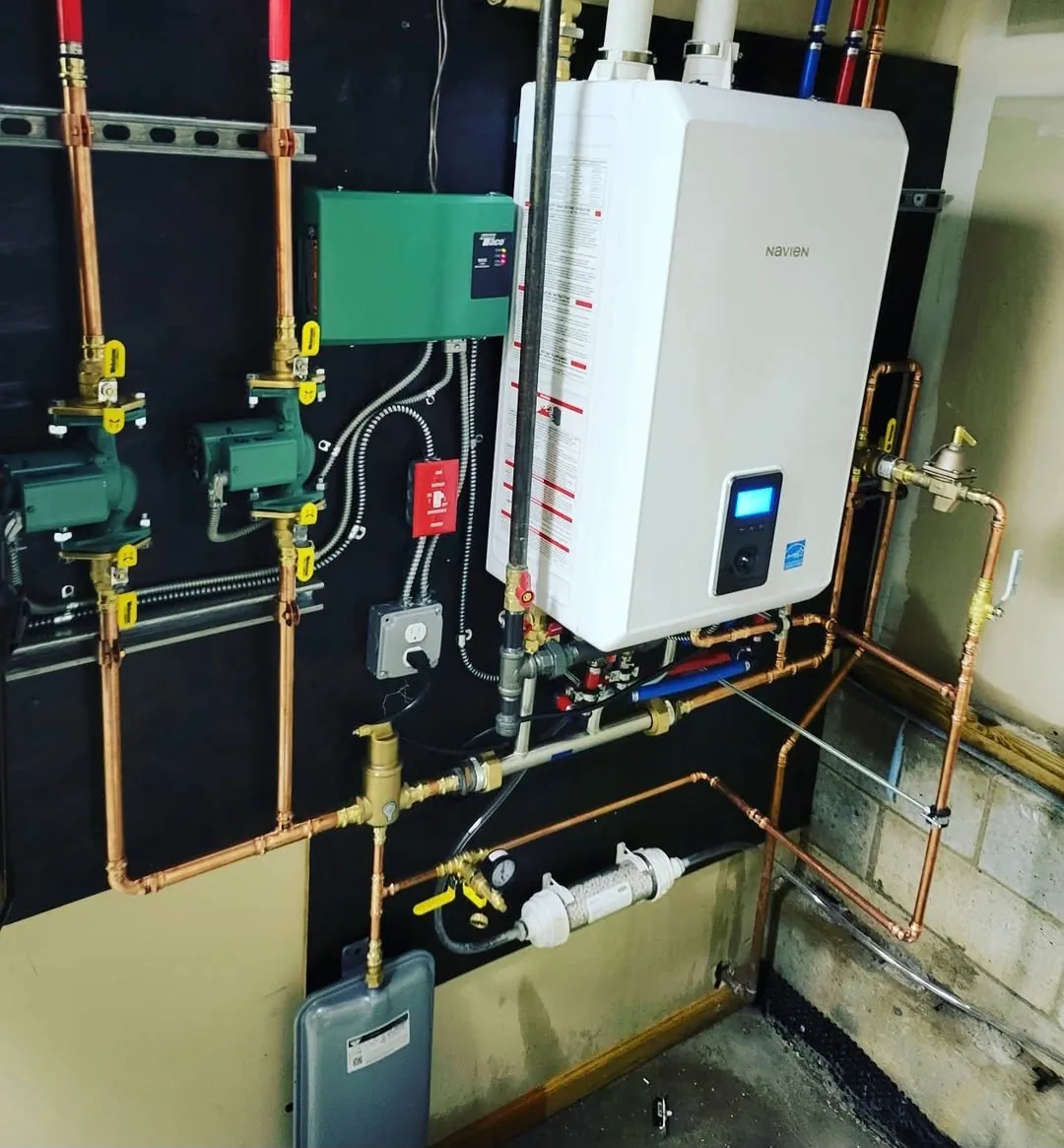
NJ plumbing & heating guide
What Is Hydronic Heating?
Hydronic heating explained. How hot-water heat works, its NJ home benefits, and how it differs from steam and forced air. Read more.
Licensed NJ Master Plumber #13345 · 4.9★ (294 Google reviews)
By Morey Katzourin · NJ Master Plumber License #13345· Bonded & insured
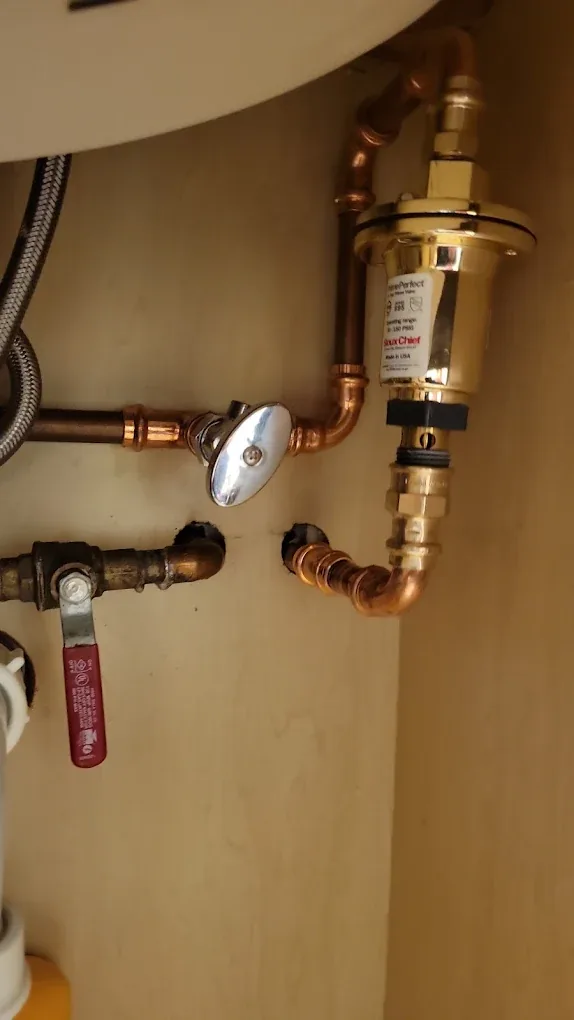
Hydronic heating is heating that uses hot water, circulated through a closed loop of pipe, to warm your home through baseboards, radiators, or radiant floors. It heats a large share of the older and mid-century houses across West Orange, Livingston, Montclair, and the Caldwells, and plenty of newer homes with baseboard zones. If you grew up with forced air and inherited a hot-water system, the controls can feel like a mystery. Here is the part most homeowners never get told. When one room in a hydronic house stays cold, the boiler is rarely the problem. A licensed NJ plumber who actually works on hot-water heat can usually track the cause in minutes.
What Is Hydronic Heating?
Hydronic heating warms your home by circulating hot water through a sealed loop of pipe to emitters like baseboards, radiators, or in-floor tubing, then returning the cooled water to a boiler to be reheated. The U.S. Department of Energy notes that hot-water distribution can deliver more even, comfortable heat than forced air because warmth radiates from surfaces instead of being blown through the room (DOE Energy Saver, Radiant Heating). The word "hydronic" just means water-based.
That distinction matters more than it sounds. Water carries far more heat per unit of volume than air does, which is why a compact loop of half-inch pipe can move the same heat a bulky duct system needs much larger volume to deliver (DOE Energy Saver, Radiant Heating). Less moving air also means less dust, fewer drafts, and a quieter house.
How Hydronic Heating Works (Step by Step)
A hydronic system runs on a simple, repeating cycle. Once you picture the loop, the rest of the components make sense.
- The boiler heats water to a set temperature, usually somewhere between 140 and 180 degrees for baseboard systems, lower for radiant floors.
- A circulator pump pushes that hot water out of the boiler and through the loop of pipe.
- As the water passes through baseboards, radiators, or floor tubing, it gives up its heat to the room. The emitter warms, the room warms.
- The now-cooler water returns to the boiler to be reheated, and the cycle repeats.
- Thermostats and zone valves control which parts of the house get heat, so the upstairs bedrooms and the downstairs living space can run as separate zones.
That zoning ability is one of the real advantages of hot-water heat. You are not stuck heating the whole house to warm one floor.
Types of Hydronic Systems
Most northern-NJ homes run one of three hydronic setups, and each behaves a little differently.
Baseboard convectors are the strips you see running along the base of the wall, usually under windows. Inside the metal cover sits a copper pipe wrapped in thin aluminum fins. Water heats the fins, the fins heat the air, and warm air rises off the unit by convection. This is the most common hydronic emitter in mid-century NJ homes.
Cast-iron radiators are the heavy freestanding units in older colonials and pre-war houses around Montclair and the Oranges. They hold a lot of water and a lot of heat, so they warm up slowly and stay warm long after the boiler cycles off. Many homeowners assume old radiators are inefficient. A well-maintained one is just a large, steady heat battery.
Radiant floor systems run flexible tubing under the floor, so the whole floor surface becomes the emitter. It is the most comfortable form of hydronic heat and increasingly common in NJ additions and renovations, though it is a bigger install because the tubing goes in before the floor does.
Hydronic vs Forced-Air Heating
The difference between hydronic and forced-air heating comes down to what carries the heat. Water in a closed loop versus furnace-heated air blown through ducts. Here is how they compare on the things homeowners actually feel.
| Factor | Hydronic (hot water) | Forced air |
|---|---|---|
| Comfort | Steady, even radiant warmth | Warms fast, but can feel drafty as it cycles |
| Air quality / dust | Little air movement, less dust circulated | Blows dust and allergens through ducts |
| Efficiency | Water holds and moves heat efficiently | Duct losses can waste heat in unconditioned space |
| Zoning | Easy room-by-room zoning with zone valves | Zoning is possible but harder and costlier |
| Upfront cost | Higher, especially radiant floor | Generally lower to install |
| Works with central AC | No ducts, so it cannot share ductwork for AC | Same ducts can carry cooling |
There is an honest trade-off here that most competitors skip. Hydronic heat has no ducts, so it cannot share a duct system with central air conditioning. If you want whole-house AC in a hydronic home, you are looking at a separate ducted or ductless mini-split system. That is a real planning consideration if you are weighing systems for a renovation, not a reason to avoid hydronic.
Key Parts of a Hydronic System
If you can name the parts, you can talk to your plumber about what is going on. A typical hydronic system includes
- Boiler. Heats the water. Can be a standard cast-iron unit or a high-efficiency condensing model.
- Circulator pump. The small motor that moves water through the loop. Most homes have one per zone.
- Zone valves. Open and close to send heated water to specific zones on a call for heat.
- Expansion tank. Absorbs the pressure change as water heats and expands, protecting the system.
- Manifold. The distribution hub that splits flow out to multiple loops, common on radiant systems.
- Thermostat. Tells each zone when to call for heat.
When we service a system, we check that expansion tank and those zone valves early. A waterlogged expansion tank or a stuck valve causes symptoms people wrongly blame on the boiler.
Why One Room Stays Cold (NJ Old-Home Reality)
The number-one hydronic complaint is one room or one floor staying cold while the boiler runs fine, and it is almost never the boiler. In a zoned hot-water system, a cold zone usually points to one of three things, and you check them in this order.
First, trapped air. Air rises to the high points of the loop, and once an air pocket sits in a baseboard or radiator, water cannot circulate past it, so that emitter goes cold. This is why we get a wave of "bleed the radiator" calls at the first real cold snap every year. Systems get refilled or topped off over the summer, air settles at the top of the loop, and the problem only shows up when the heat finally runs hard. Bleeding the air from the affected baseboard or radiator often restores heat on the spot.
Second, a stuck zone valve. If the valve that feeds that zone will not open on a call for heat, no hot water reaches it no matter how well the boiler runs. A hydronic-literate plumber tests the valve and its actuator rather than guessing.
Third, a failing circulator pump. If the pump for that zone is not moving water, the zone stays cold. Circulators are wear parts and they do eventually go.
The reason this matters. A generalist who does not live in hot-water heat tends to start replacing expensive parts, sometimes the boiler itself, when a five-minute purge and a zone-valve check would have solved it. Purge the loop, check the zone valve and circulator, and only then look at the boiler. That order saves homeowners real money.
If your heat is uneven and bleeding the emitters does not fix it, that is the point to bring in hydronic heating repair in NJ rather than throwing parts at it. Talk to a hydronic heating specialist at (908) 376-9159.
Hydronic vs Steam. How They Differ
Both hydronic and steam are boiler-based systems, but they distribute heat differently. Hydronic circulates hot water through a pumped, closed loop. A steam system boils water into steam, which rises on its own pressure through the pipes to the radiators, gives up its heat, condenses back to water, and drains back to the boiler by gravity. Steam has no circulator pump and typically no zone valves in the same way, which is why an old steam house heats and behaves so differently from a hot-water one.
If you are not sure which one you have, the presence of a circulator pump and zone valves points to hydronic. A single large radiator valve and knocking or hissing pipes points to steam. It is worth reading up on what a steam boiler is and how steam boiler vs hydronic heating compared if you are deciding between systems or trying to identify your own.
Keep reading
More NJ plumbing & heating guides
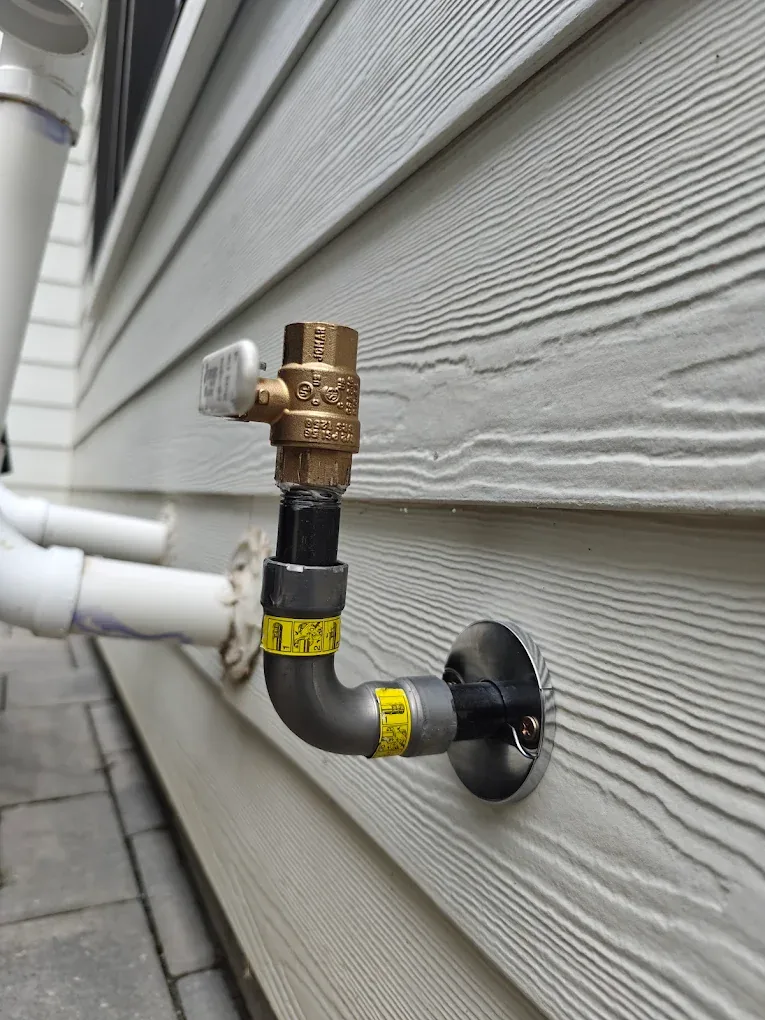
What Is Backflow Testing? NJ Rules Explained
Backflow testing explained for NJ. Who must test, the annual NJDEP mandate, RPZ/DCVA, and the Certificate of Compliance. Call (908) 376-9159.
Read the guide
Frozen Pipe? What to Do Right Now
Frozen pipe? Step-by-step on what to do right now to prevent a burst, and when to call a 24hr Sun-Fri NJ plumber. Call (908) 376-9159.
Should You Repair or Replace Your Water Heater?
When to repair vs replace a water heater in NJ, age, cost and safety rules of thumb from a licensed plumber. Call (908) 376-9159.