NJ plumbing & heating guide
Tankless vs Tank Water Heater. Which Is Better for an NJ Home?
Tankless vs tank water heater compared for NJ homes. Cost, lifespan, efficiency, winter flow and hard water, from a licensed plumber.
Licensed NJ Master Plumber #13345 · 4.9★ (294 Google reviews)
By Morey Katzourin · NJ Master Plumber License #13345· Bonded & insured
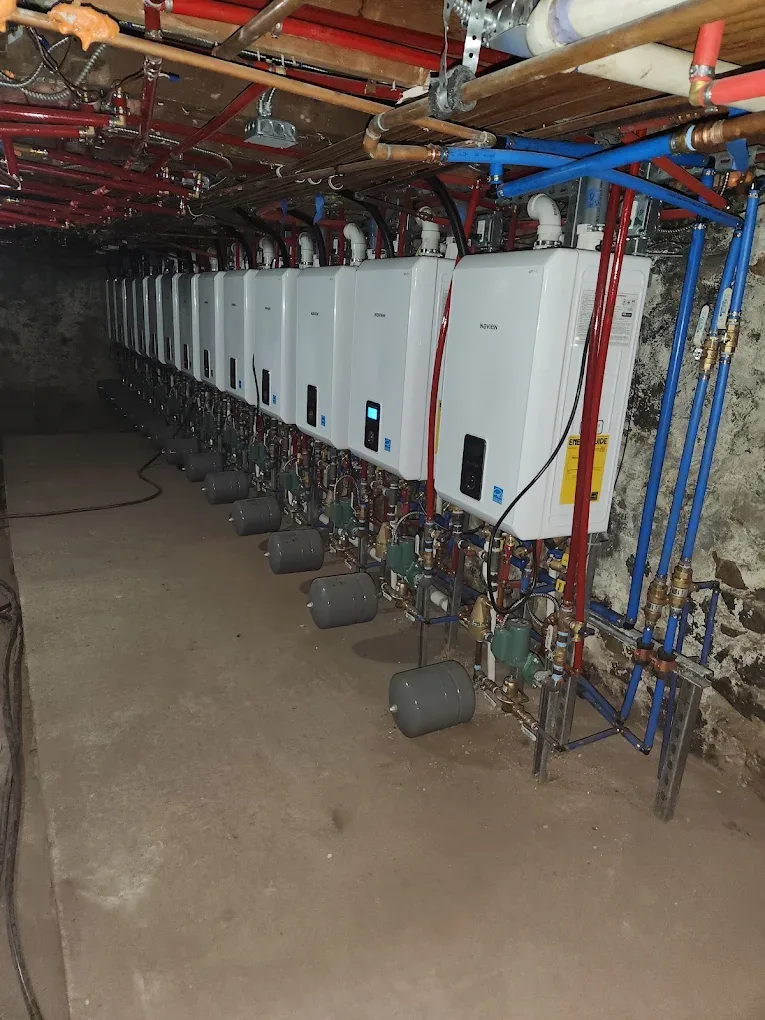
Is a tankless or a tank water heater better? A gas tankless heater is better if you want endless hot water, a longer lifespan, and lower running costs, and you are willing to pay more upfront. A tank heater is better if you want the lowest installed price, a simple like-for-like swap, and hot water that does not depend on how many showers run at once. Neither one is right for every house. The answer for your home comes down to how much hot water you use at the same time, what your gas line and venting can support, how long you plan to stay, and, in northern New Jersey, two local factors most online comparisons skip. Cold winter groundwater and hard water. We are a licensed NJ Master Plumber (License #13345) and Navien Certified for tankless installs, and we install both kinds, so this guide is a straight comparison rather than a sales pitch.
Tankless vs Tank at a Glance
| Tank water heater | Tankless water heater | |
|---|---|---|
| How it works | Keeps 40 to 50 gallons hot all the time | Heats water only when a tap opens |
| Typical NJ installed cost | About $1,800 to $3,200 (gas) | About $4,000 to $7,500 (gas) |
| Typical lifespan | About 10 to 15 years | 20 years or more |
| Hot water supply | Runs out when the tank is used up | Never runs out, limited by flow rate |
| Energy use | Loses heat standing by | No standby loss |
| Space | Large floor footprint | Wall-mounted, compact |
| Maintenance | Annual flush, anode check | Annual descaling flush, filter clean |
| Install complexity | Usually a direct swap | New venting, often a larger gas line |
Lifespan figures are from the U.S. Department of Energy. Costs are typical northern NJ market ranges, not a Maccabi quote, and our full tankless water heater cost guide and water heater replacement cost guide break them down line by line.
How a Tank Water Heater Works
A conventional storage tank holds 40 to 50 gallons, sometimes more, and keeps it hot around the clock. A gas burner or electric elements switch on whenever the temperature drops. When you run a shower, hot water leaves the top of the tank and cold water enters at the bottom to be heated.
The strengths are simplicity and price. A tank is the cheapest water heater to buy and install, the technology is decades old, and in most homes a replacement uses the existing gas line, vent, and water connections. Many gas tank heaters with a standing pilot will even keep making hot water during a power cut.
The weaknesses are capacity and waste. Once the hot water in the tank is used up, you wait for it to reheat, which is why the third shower in a busy morning goes cold. The tank also loses heat all day and night whether anyone uses it, which is called standby loss.
How a Tankless Water Heater Works
A tankless, or on-demand, water heater has no storage. When you open a hot tap, water flows through a heat exchanger and a powerful burner heats it instantly to the set temperature. When you close the tap, the burner shuts off.
Because it only heats water you use, there is no standby loss. According to the U.S. Department of Energy, for homes that use 41 gallons or less of hot water a day, demand water heaters can be 24% to 34% more energy efficient than conventional storage tank heaters, and 8% to 14% more efficient for homes that use a lot more hot water, around 86 gallons a day. The DOE also puts tankless lifespan at more than 20 years, against 10 to 15 for a tank.
The limit is flow, not volume. A tankless unit can only heat so many gallons per minute. If you ask for more hot water at once than it can heat, the water at every tap runs cooler. That is why sizing matters more than anything else.
Sizing: The NJ Winter Factor
This is where most online comparisons let New Jersey homeowners down. A tankless heater's output depends on the temperature rise, meaning how much it has to warm the incoming water. In summer, groundwater coming into a northern NJ home might be in the 60s. In January it can drop into the 40s. To deliver 120 degree water from 40 degree water, the heater has to raise the temperature by about 80 degrees, and the gallons per minute it can deliver drop accordingly.
In plain terms, a unit that easily runs two showers in July might struggle with two showers and the dishwasher in February. A typical household shower draws about 2 gallons per minute and a kitchen tap about 1.5, so two showers plus a kitchen tap is already around 5 to 6 gallons per minute at a large winter temperature rise. A proper installer sizes for the worst week of winter, not the average day.
Gas tankless heaters handle this far better than electric ones. Whole-house electric tankless units need very large electrical service, often more than an older home's panel can provide, and they still struggle with a big winter temperature rise. In most northern NJ homes, if you go tankless, gas is the practical choice.
The Hard Water Factor
Much of northern New Jersey has moderately hard to hard water, and hardness matters for both types of heater.
In a tank heater, minerals settle as sediment on the bottom of the tank. That is the rumbling and popping you hear from an older unit, and it shortens tank life. An annual flush and an anode rod check every few years help a lot. Our guide to how long a water heater lasts explains why NJ tanks often fail around 8 to 10 years.
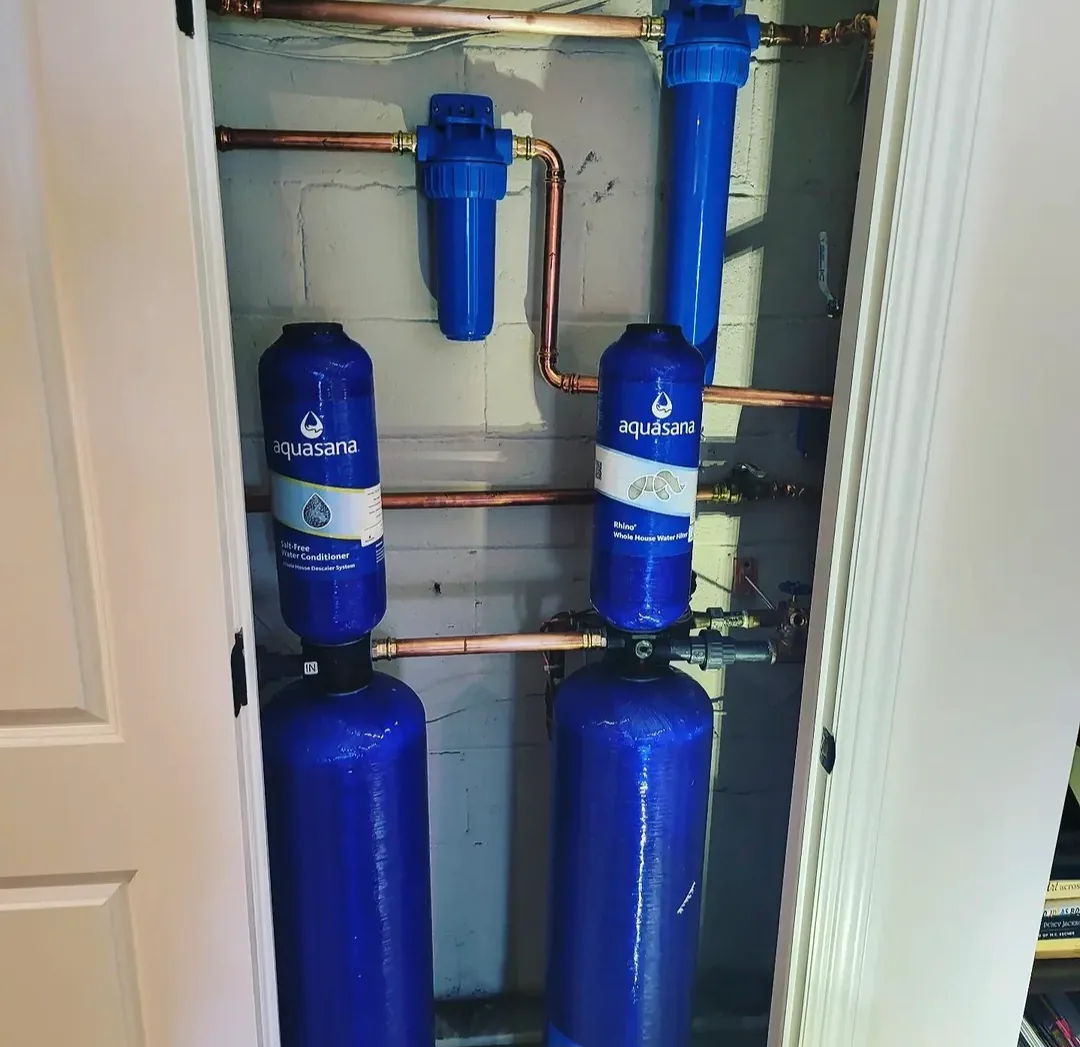
In a tankless heater, minerals build up as scale inside the heat exchanger. Left alone, scale reduces efficiency, triggers error codes, and shortens the unit's life. The fix is a yearly descaling flush with isolation valves, which we install on every tankless job, and in hard-water homes, a scale-prevention filter or a whole-house water filtration system. Skip the descaling and a tankless heater will not reach its 20-year potential.
Installation: Why Tankless Costs More Upfront
The unit itself costs more, but most of the price gap is installation.
- Venting. A tankless heater usually cannot use the old chimney vent. High-efficiency condensing units vent through the wall with PVC pipe, which means a new penetration and correct clearances from windows and doors.
- Gas line. A whole-house tankless burner can use four to five times the gas of a typical tank heater at full fire. In many older NJ homes, the existing gas line is too small and has to be upsized back to the meter.
- Condensate drain. Condensing units produce acidic condensate water that needs a drain and, ideally, a neutralizer.
- Electrical. Gas tankless units need a standard outlet for the controls and fan. That also means they stop working during a power cut unless you add a backup.
- Permit. In New Jersey, replacing a water heater requires a plumbing permit and inspection either way. Our guide on whether you need a permit to replace a water heater in NJ covers what that involves.
A tank-for-tank swap avoids most of these changes, which is why it stays the budget option.
The Real Cost Over 20 Years
Upfront, a gas tank replacement in northern NJ typically runs about $1,800 to $3,200 installed, and a gas tankless install about $4,000 to $7,500. That gap looks large, but compare it over the life of the equipment. A tankless unit that lasts 20 years or more may outlive two tank heaters. Add the DOE's efficiency savings on gas, and the long-run cost gap narrows a lot, especially for a family that plans to stay in the home.
It does not always close completely. For a single person or a couple using modest hot water, the energy savings are smaller and payback takes longer. For a large family that runs out of hot water every morning, tankless often wins on comfort alone. Rebates can tip the balance. High-efficiency and heat-pump water heaters may qualify for money back through NJ Clean Energy rebates.
What About a Heat-Pump (Hybrid) Water Heater?
There is a third option worth knowing about. A heat-pump water heater is a tank with a heat pump on top that pulls heat from the surrounding air. It is the most efficient water heater on the market by a wide margin, and often the most rebate-friendly. It needs space around it, a condensate drain, and a room that stays reasonably warm, so a cramped closet or a freezing crawlspace is a poor fit. In a large, unfinished North Jersey basement, it can be an excellent choice. In northern NJ, installed heat-pump units typically run about $2,800 to $5,000.
Which Should You Choose?
Here is how we usually sort it out on a home visit.
Choose a tank water heater if:
- Your current tank failed and you need hot water back fast at the lowest cost.
- Your household uses moderate hot water and rarely runs out.
- Your gas line and venting would need expensive upgrades for tankless.
- You may sell the house within a few years.
Choose a gas tankless water heater if:
- You regularly run out of hot water, or you have a large soaking tub.
- You plan to stay in the home long-term and want lower running costs.
- You need the floor space, for example in a finishing basement.
- You are willing to do yearly descaling maintenance.
Consider a heat-pump water heater if:
- You want the lowest running cost and the best rebates.
- The heater sits in a large basement with space and a drain nearby.
Consider an indirect water heater if:
- You have a hot-water (hydronic) boiler with capacity to spare. An indirect tank heated by the boiler can be very efficient and long-lived.
Our Honest Take
Tankless is a great product when it is sized and installed correctly, and a frustrating one when it is not. Most of the bad tankless stories we hear trace back to an undersized unit, an undersized gas line, or no descaling for years. A tank heater is not old-fashioned. For many NJ homes, it is still the sensible choice. We will measure your peak demand, check your gas line and venting, and tell you which one fits, even if the answer is the cheaper option.
FAQ
Frequently asked questions
24-hour, Sun–Fri availability
Not seeing your question? Call or text and a licensed plumber will talk it through, no answering service run-around.
Call or Text (908) 376-9159Often, yes, for families who run out of hot water and plan to stay in the home, because a gas tankless unit lasts 20 years or more and avoids standby losses. It costs more upfront because of venting and gas line work, and it must be sized for cold NJ winter groundwater. For small households with modest hot water use, a tank is often the better value.
Keep reading
More NJ plumbing & heating guides
What Is Backflow Testing? NJ Rules Explained
Backflow testing explained for NJ. Who must test, the annual NJDEP mandate, RPZ/DCVA, and the Certificate of Compliance. Call (908) 376-9159.
Read the guide
Frozen Pipe? What to Do Right Now
Frozen pipe? Step-by-step on what to do right now to prevent a burst, and when to call a 24hr Sun-Fri NJ plumber. Call (908) 376-9159.
Should You Repair or Replace Your Water Heater?
When to repair vs replace a water heater in NJ, age, cost and safety rules of thumb from a licensed plumber. Call (908) 376-9159.